


The 48th Pia Film Festival / PFF Award 2026


The 48th Pia Film Festival 2026
Dates: 18-26 September 2026
Venue: National Film Archive of Japan
The Pia Film Festival in Kyoto 2026
Dates: 5-8 November 2026
Venue: The Museum of Kyoto
Films in the PFF AWARD COMPETITION 2026
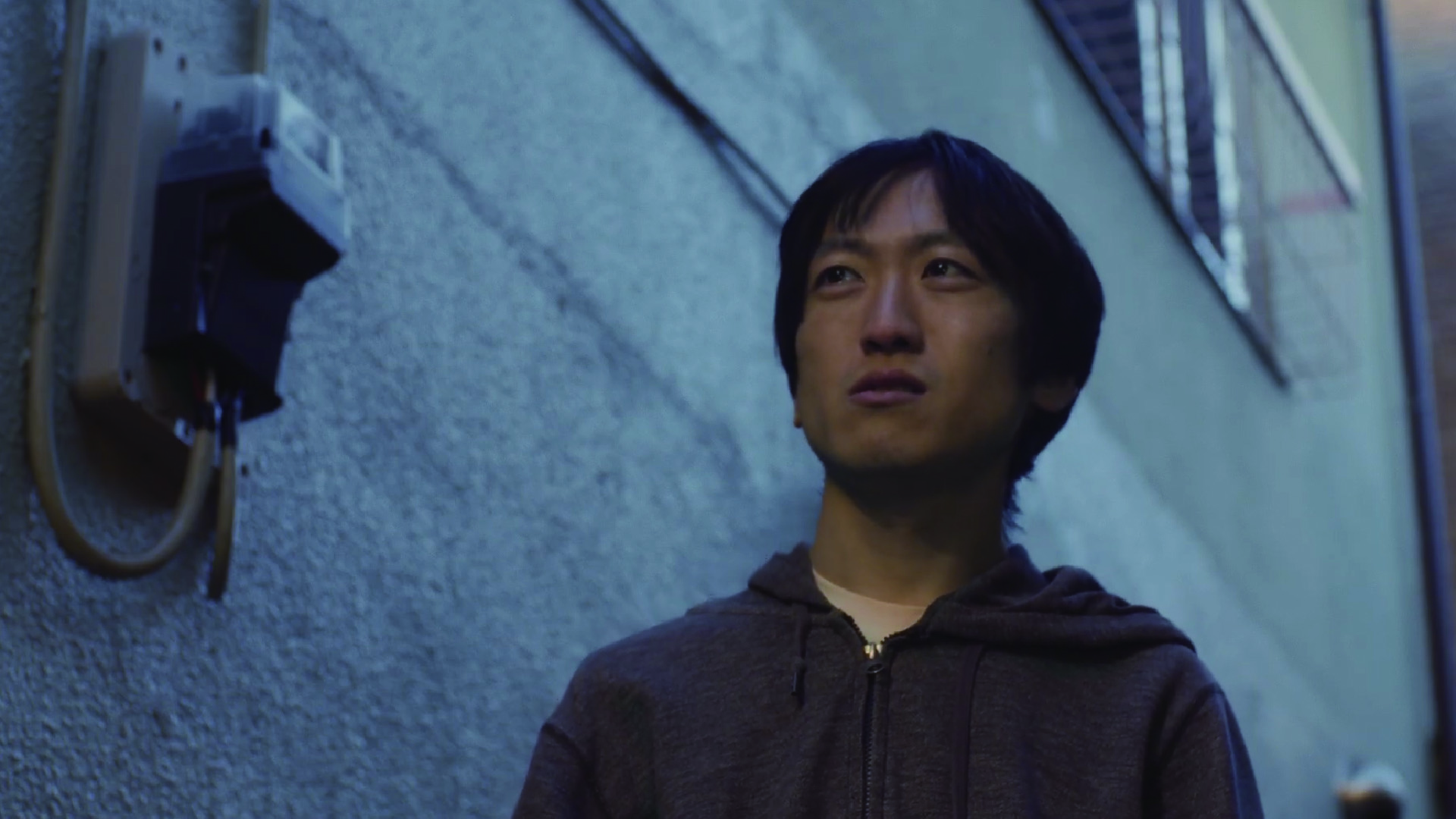
Beside/隣に
★Grand Prize and Cinema Fan Prize
Director: Seike Takashi | Running time: 33 min
20-something freeter Kojima comes home and finds his mother in an unconscious state in bed. He asks his similarly aged neighbor Yokota to come over and look at her. Although Yokota is studying for a medical school entrance exam, he’s reluctant to assess someone in the real world. Unfortunately, there don’t seem to be any signs of life, and Kojima reveals her doctor hadn’t given her long to live. While the pair wait for her regular doctor to arrive, Yokota speaks well of Kojima’s mother’s neighborly exchanges in the past and her homemade lemonade. Kojima dissuades him from pointless niceties, triggering a protracted self-examination of how they’ve dealt with their parents and indeed how they’ve ultimately defined their own identities by what they elect to say, or leave unsaid. Kojima’s mother suddenly awakens. She has a lot to convey herself, adding a more heartfelt perspective to the dynamic. Several months later, some things have changed but perhaps others haven’t...
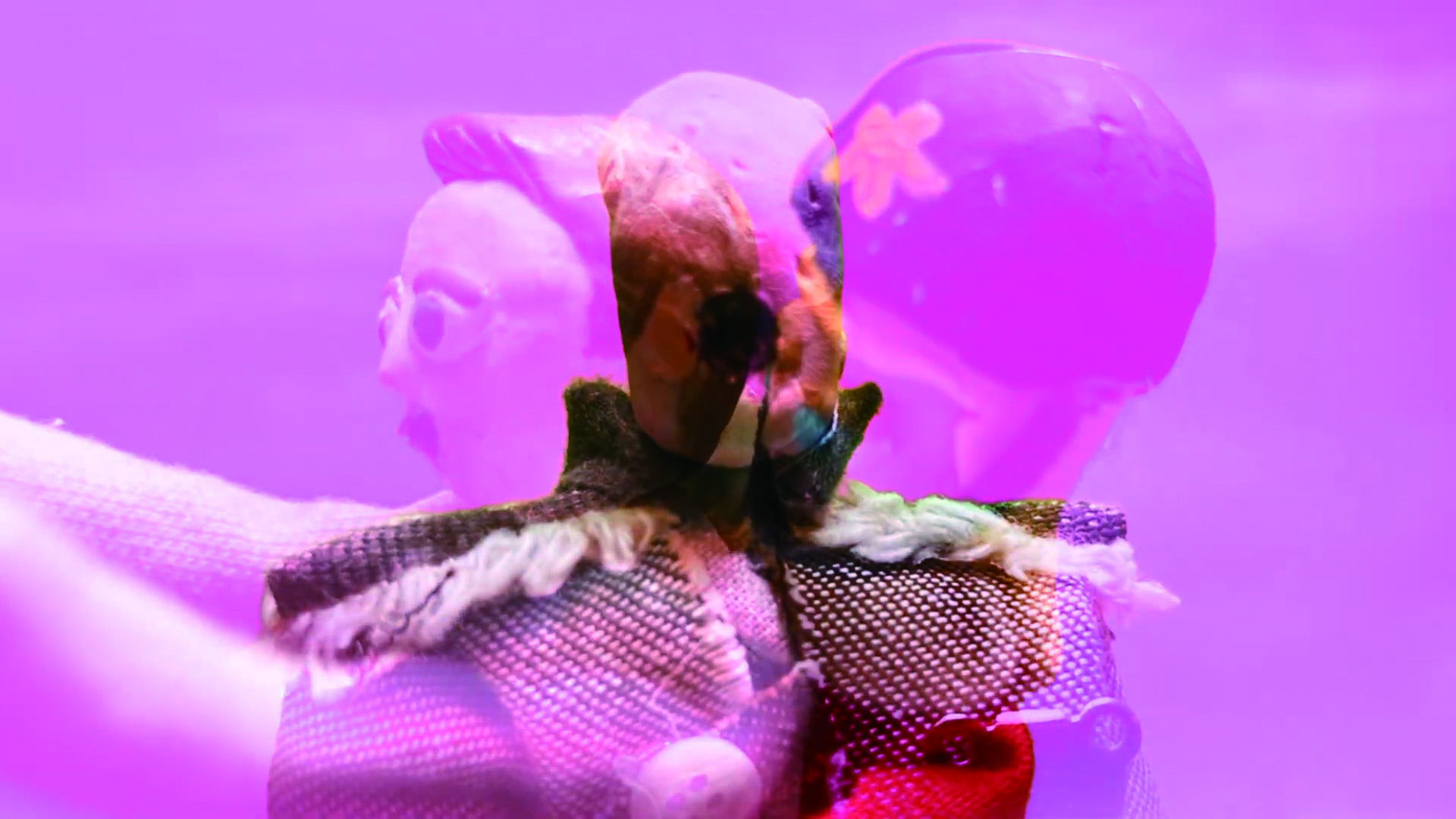 The Perfect Body
★Runner-up Prize
Director: Nakashima Kiri, Konishi Juntaro, Kinoshita Yusuke | Running time: 30 min
At a remote Antarctic laboratory, researcher Dr. Kobayashi injects himself with the long-awaited serum for the “perfect body” he’s been dreaming of. Two decades after World War 8 has ended, a new “Kumamusian” race exists –– half human half tardigrade. A human water bear! A Kumamusian boy living the high life driving fast cars and playing rock guitar gives a special energy drink to a boy named Pokku. Pokku is horrified when his hand morphs into a water bear appendage. He wants to remain human. Meanwhile, Dr. Kobayashi has transformed into a giant, deformed water bear through over-injection and aims to convert all of humanity and take over the galaxy. Pokku gets help from his movie club buddies to track down Dr. Kobayashi’s former lab assistant, who holds the antidote. But they’re kidnapped by Dr. Kobayashi, who’s gathering his forces for the final takeover. Can the Kumamusian boy’s rock music help save the world in time?
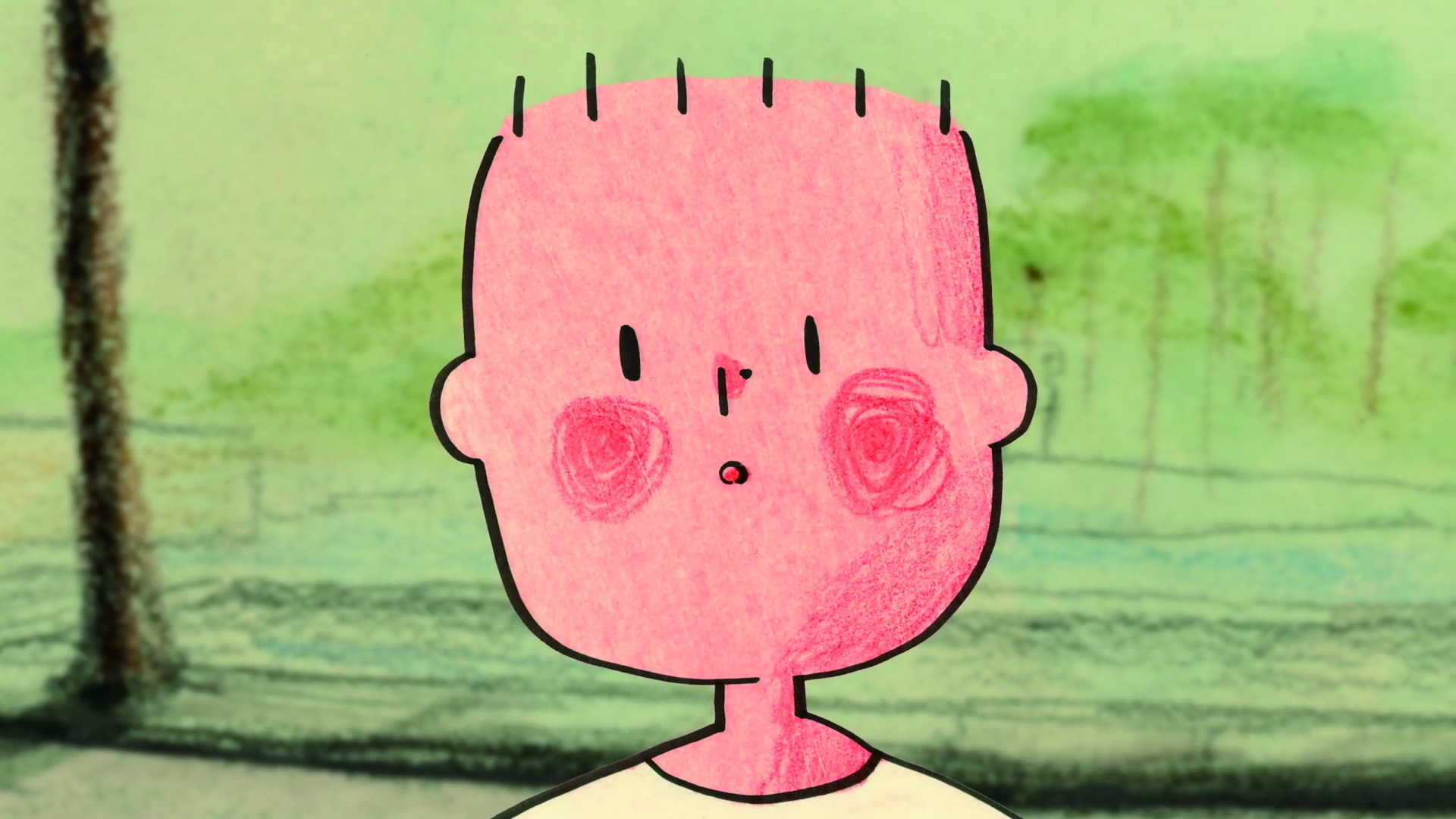 So He Grabbed the Knife/そしてナイフを手にした
★Special Jury Prize
Director: Kuwa Sam | Running time: 12 min
A father returning home from an overseas business trip gives his son Yang Yang some Belgian chocolate, a German cuckoo clock, and a Swiss knife. Yang Yang sometimes has dinner alone if his parents are out playing Mahjong. He’s a latchkey kid in a neighborhood with increasing incidents of youth violence and his dog is his only true friend. Yang Yang likes playing fighting arcade games but his father bans him from hanging out there with “the bad kids” such as his delinquent acquaintance Ryu. As Yang Yang’s rebelliousness grows, he steals his dad’s ID to go to a cyber café. Meanwhile, his father abandons the dog in the woods for biting other family members (but never Yang Yang). He also smashes open his son’s briefcase of private items and discovers the ID, which is the straw that breaks the camel’s back. Yang Yang grabs his Swiss knife and goes out in the neighborhood with his emotions running hot...
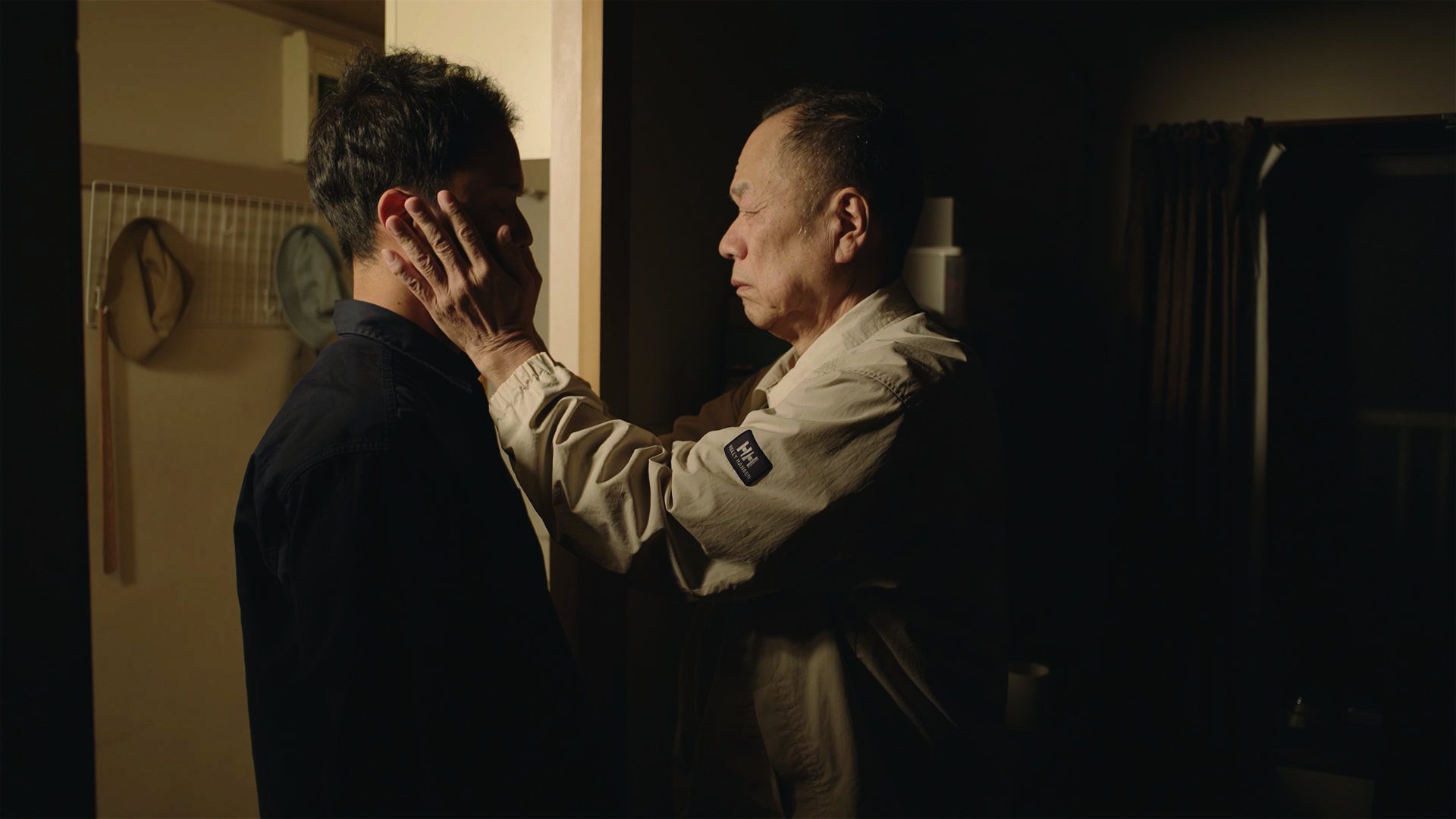 Outlines (working title)/輪郭
★Special Jury Prize
Director: Hatsumi Hirotaka | Running time: 29 min
An elderly man alone in his modest house makes a call on his flip phone. He asks his son Hirotaka to come over because the son’s mother is away working. He needs help and some food. The son drives over and his father launches into a tirade about how demanding his wife has become over his condition – Why couldn’t he have trained himself better when he lost his sight so he could work? He’s pleased that his son doesn’t complain like his wife, but Hirotaka is feeling pressure over his absences from his girlfriend and has concerns about the future (“Is your condition hereditary?”). When his father asks him to help throw away some old stuff, Hirotaka finds a camcorder and tapes. They watch home videos of Hirotaka’s youth together, when his dad was still a healthy young man. Hirotaka has to go home, and leaves his father sitting in the dark. The next day, his father makes a small but life-changing decision.
 You don't have to understand me!(working title)/わからなくていいよ!
★Special Jury Prize
Director: Shibata Hina | Running time: 57 min
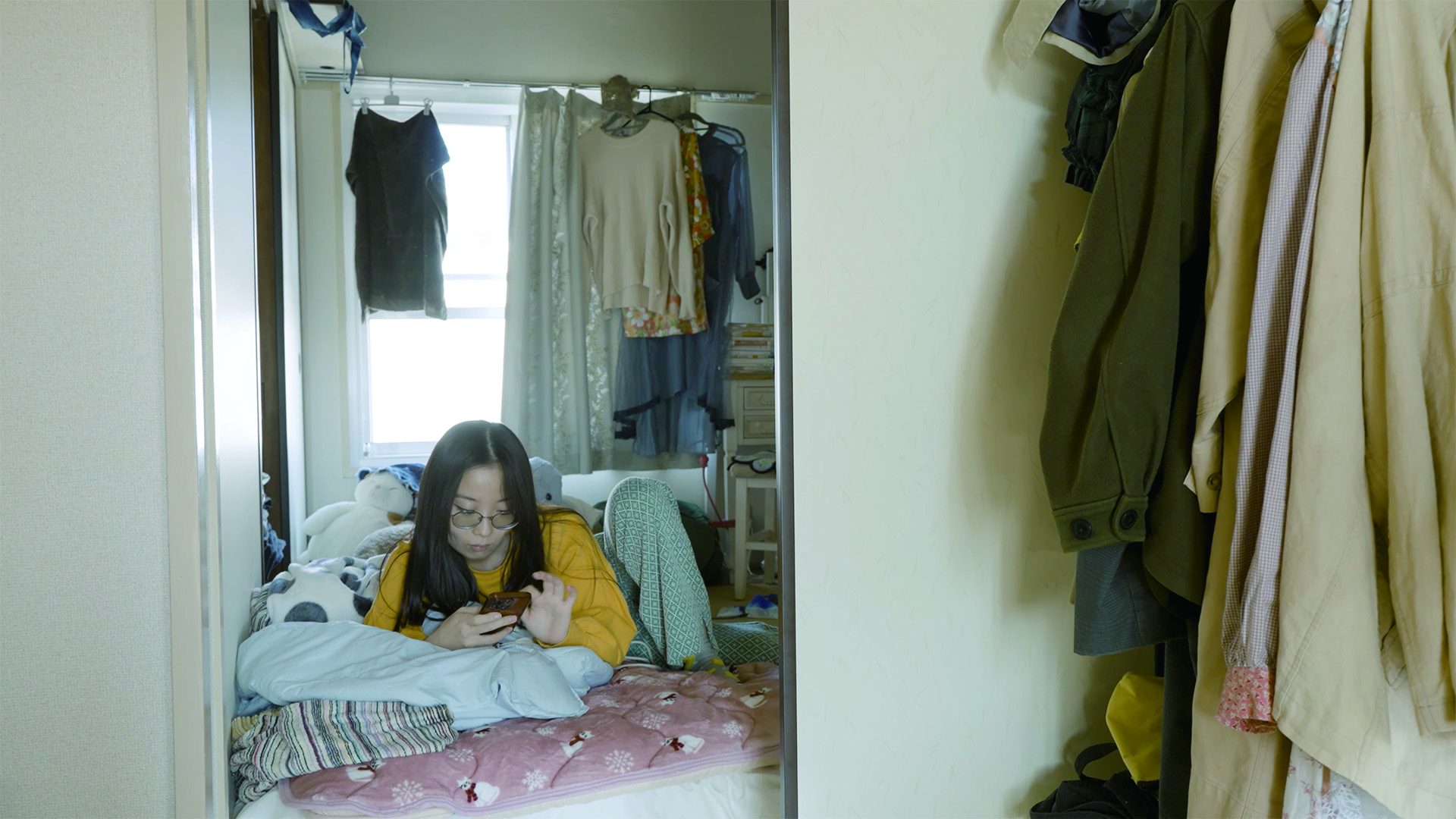
Matsu runs frantically through the night while her boyfriend Watage drives in search of her. She's angry that he didn't listen to her with full attention. He promises to be a better listener. The next day, Matsu goes through her daily domestic routine: cleaning, garbage, laundry, cooking, dishes, watering plants, and taking a bath. While she listens to her favorite radio broadcast, she boils some barking deer bones she had collected. When Watage comes home he creates different set of sounds that clash with her content wavelength – making coffee and drying his hair. The sounds of workmen outside drone on. At night, Watage snores up a storm and Matsu can't take it any more. They clean the bones together, and he proves to be proficient at it. He ignores her once again in his concentrated state, infuriating her. Matsu takes off into the night, but this time Watage joins her and they synchronize with a primal force.
A heartless game (working title)/薄情なゲーム
★HoriPro Prize
Director: Mizote Ren | Running time: 63 min
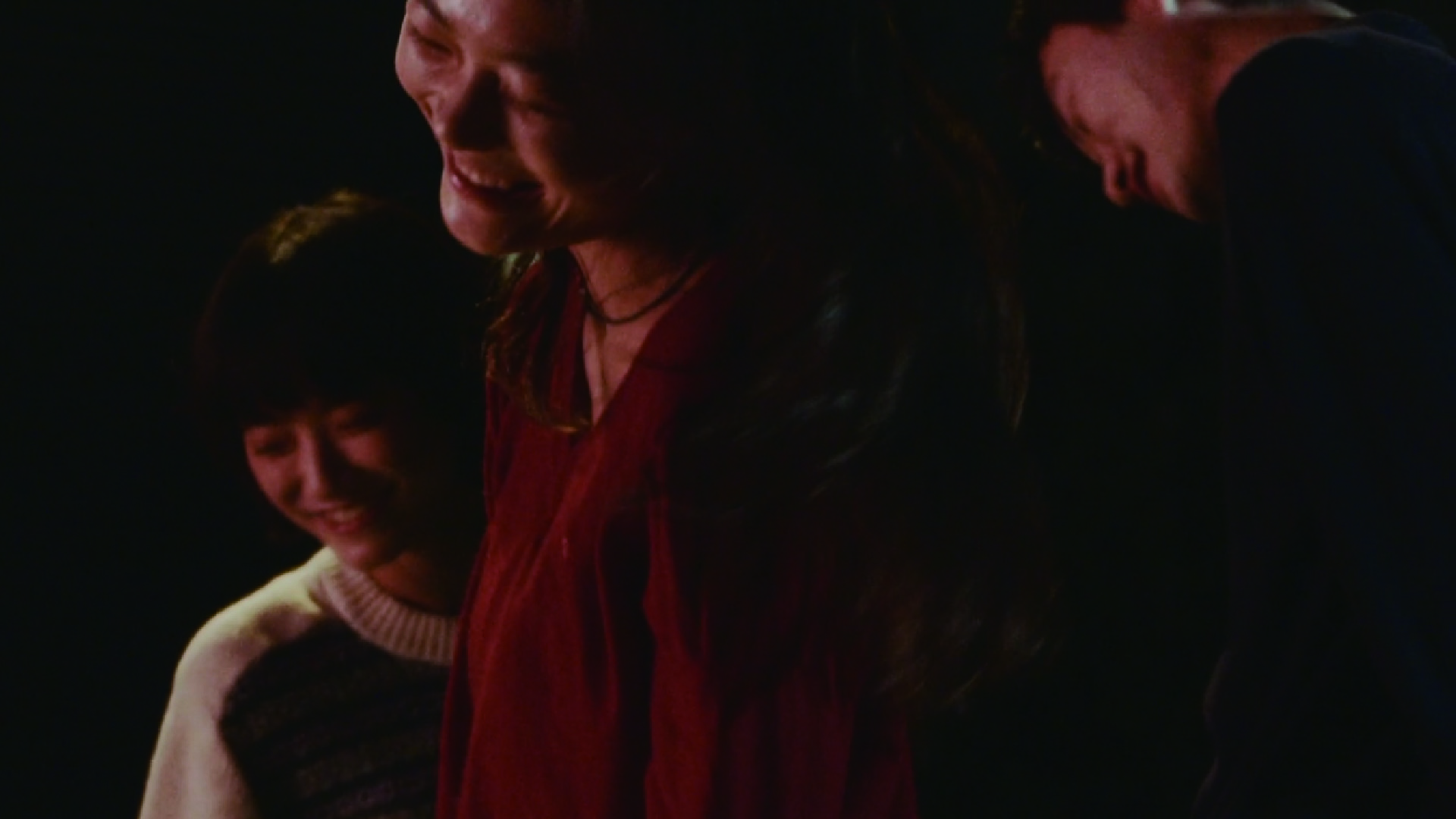
Saho and Hikaru have been going out for around a year, and Saho spends a lot of time at Hikaru’s place. One morning, her photo modeling friend Hana visits and asks if Saho has said anything to Hikaru about “you know what,” meaning the fact that Saho still has feelings for her photographer ex-boyfriend Yukito. She hasn’t. Yukito and Saho meet at a café to discuss an upcoming photo shoot by the ocean, when Yukito’s current girlfriend Chihiro spots them and uncomfortably joins the conversation. She agrees to assist, and Saho convinces Hikaru to use his car to get them there. The quartet pass the day at the seaside as feelings and truths seep out. When they return to Hikaru’s place to close out the night, thinks get increasingly uglier after Hikaru is enraged by Yukito and Saho’s flirtation. He kicks them out and is left with Chihiro and things will never go back to the way they were...
The Outer Persona (working title)/ペルソナと俺
★Soaring Together Prize
Director: Fujii Tomoya | Running time: 23 min
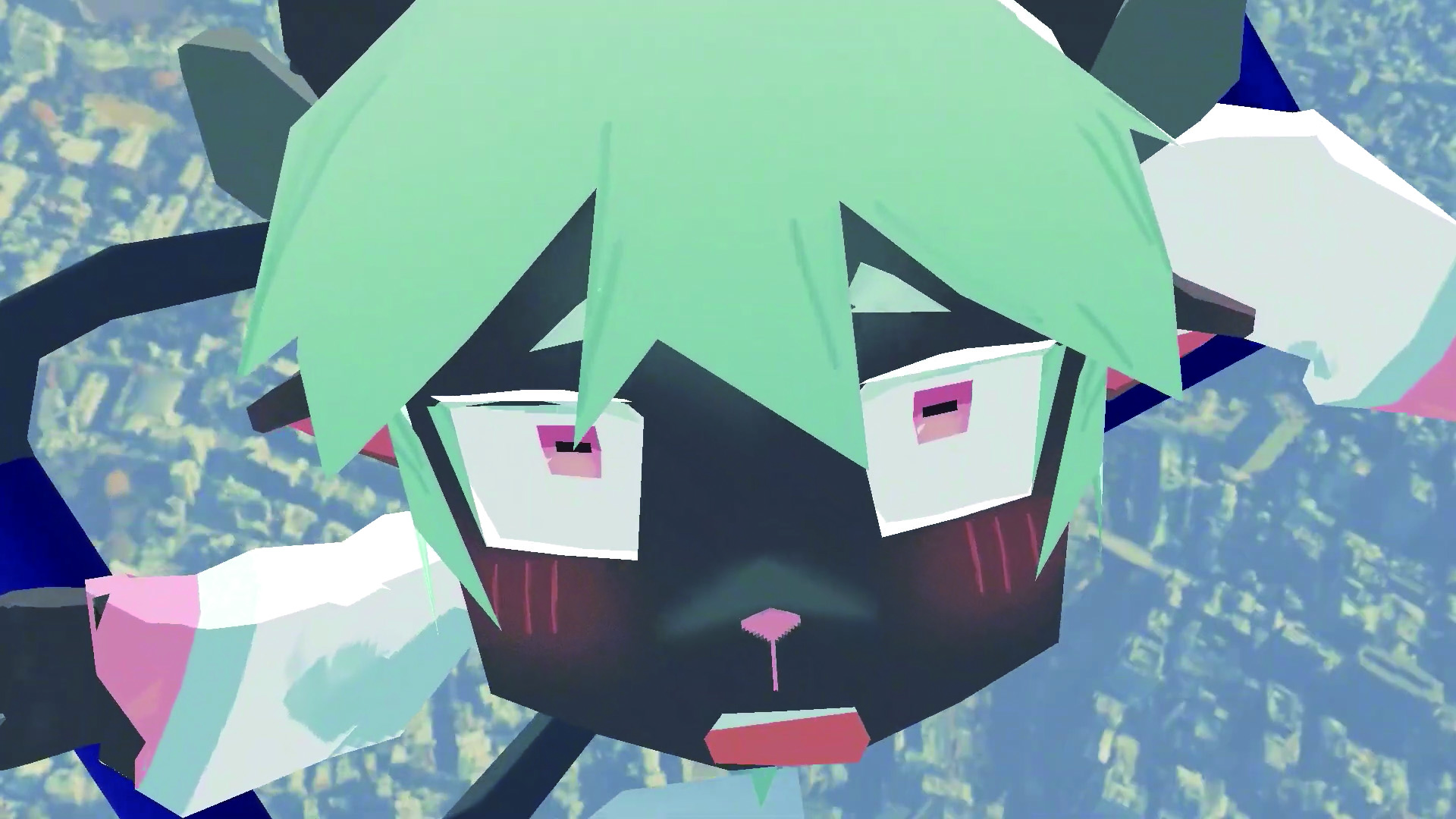
Teenage online gaming addict Monjiro can only bear to look at himself through his cute centauress-like avatar. While playing a virtual racing game, he crashes and burns and gets a life-changing zap of energy to the head. There in his bedroom, he comes face to face with the avatar. His gaming mentor Tamura visits and explains that the servers are over capacity and avatars are bleeding into reality. Tamura gets an idea to monetize the situation and sends out a mass mailing corporate pitch, but the only response is a rejection. Overnight, Monjiro transforms into a half digital, half biological spider-like creature. Tokyo is overrun with digital trash, with a huge mecca emerging from the detritus as Tokyo’s third great tower. Tamura, the corporate figure (who is in fact a national security agent) and the cute avatar work to save Monjiro and stop the digital devastation. In the end, will something shift within Monjiro in the human world?
George's Happy Romance/ジョージのハッピーロマンス
★Audience Prize
Director: Ichikawa Yuto | Running time: 53 min
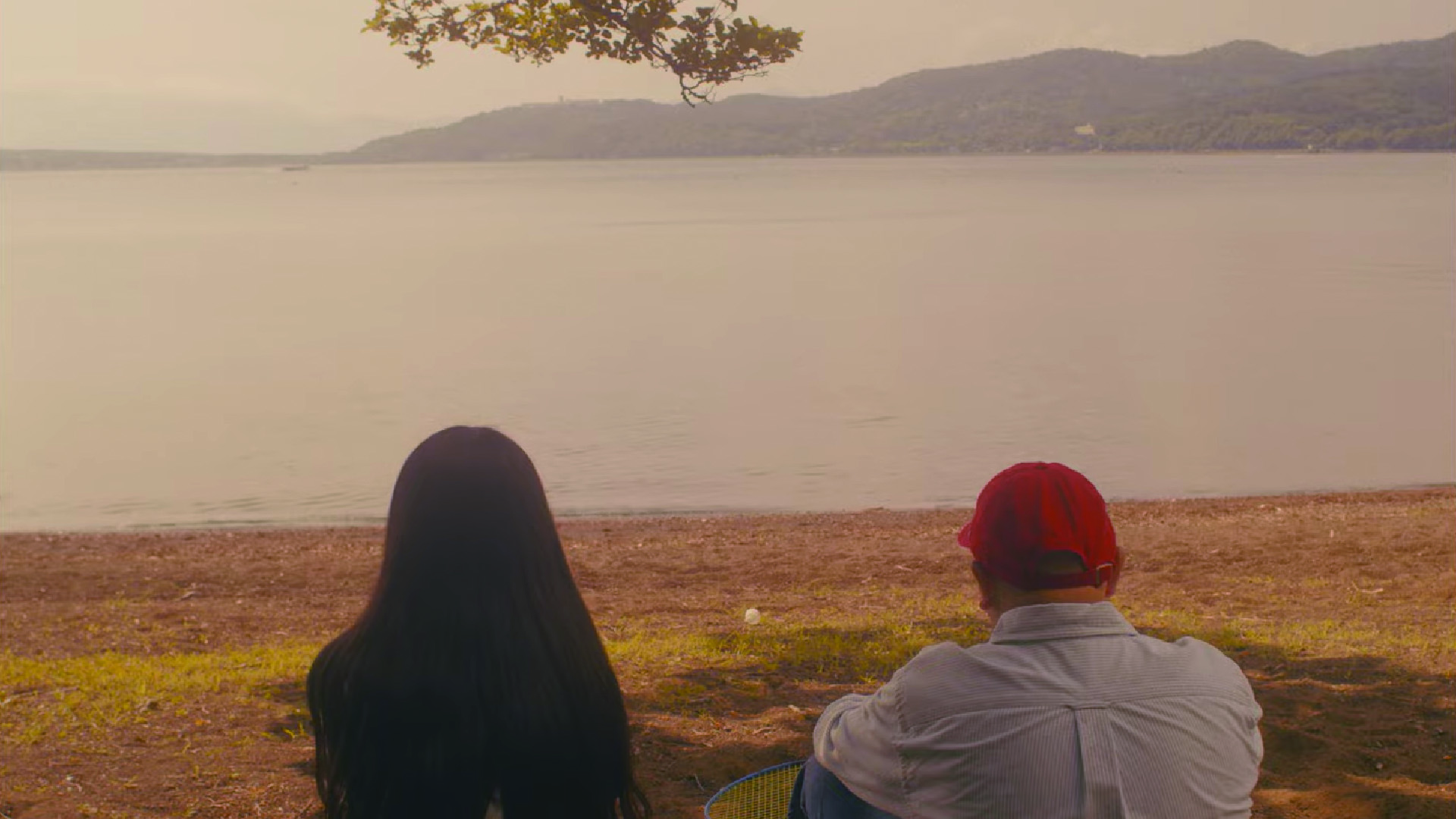
“George” suffers from alopecia and is completely bald (eyebrows included). He pens a description of himself in English as “so bald his head reflects the sun like solar panels.” He works myriad part-time jobs to save for a trip to the US, but hasn’t told his indie actress girlfriend Sayaka. He explains to his best friend “Franz” that it’s for business school. The latest job takes George, Franz and “Saudi” guy Amir to Lake Yamanaka to help dig for historical artifacts. It’s clearly pointless but group leader Yoko has a dream – to find the gold bullion her soldier grandfather may have buried in the woods. At night, George meets local girl Aoi – granddaughter of his digging boss –– at a karaoke bar and falls in love after one date. While he accompanies Yoko on her last ditch effort to find the treasure, Sayaka shows up looking for answers. But it’s at Shibuya’s famed crossing that we witness what George’s true calling is...
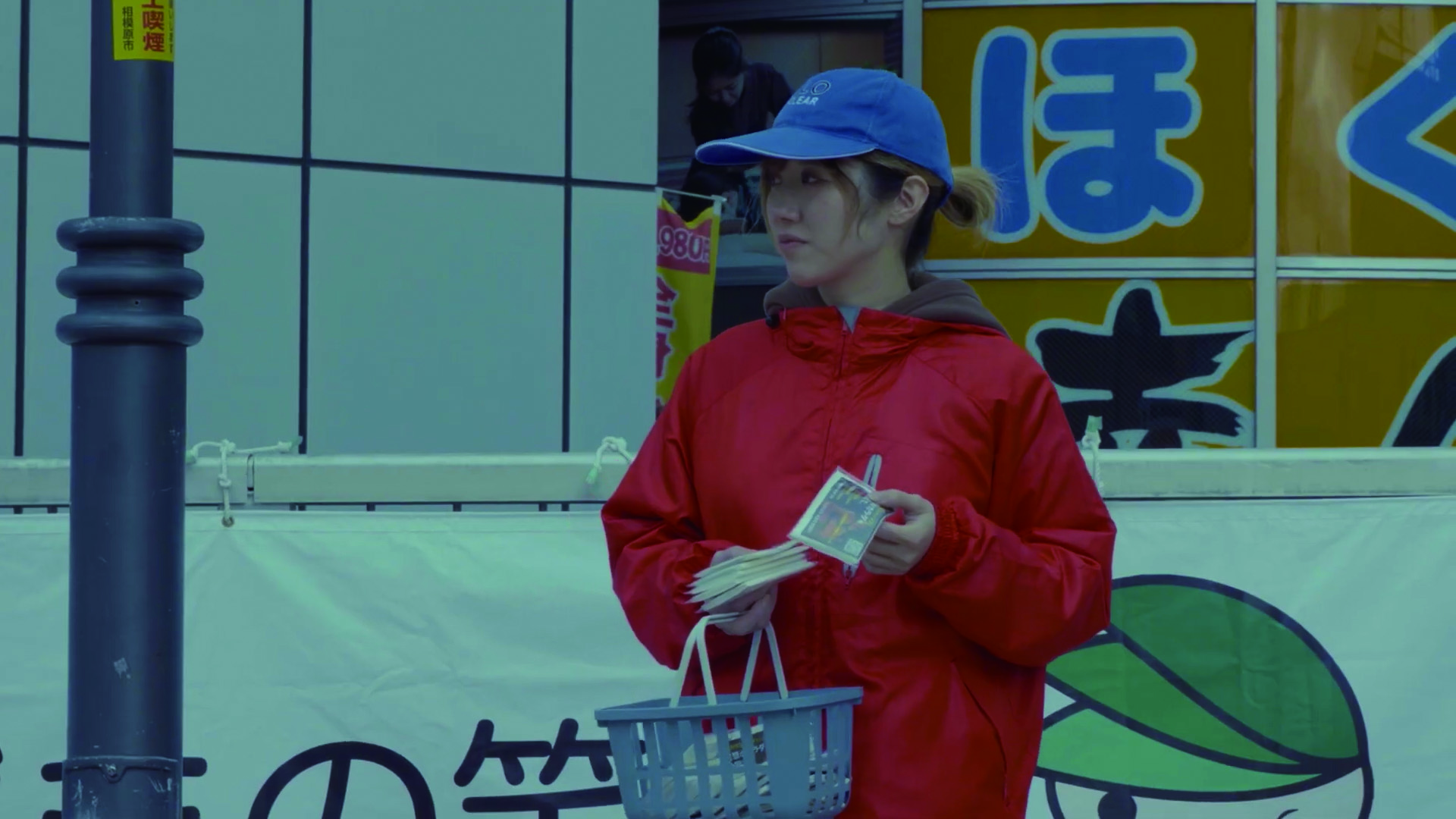
BADLAND
Director: Isshiki Sakura | Running time: 82 min
Sachiko is an art college student who works a string of part time jobs but can barely make ends meet, and her mother can’t bail her out any longer. Frantically running from classes to workplaces is her daily norm. She hands out fitness club tissues at the station, shapes dental molds, and washes dishes at a café, enduring the monotony of each task so she can pay her utility bills and for art supplies. In her English comprehension class there’s a hint of attraction between Sachiko and her classmate, who is the diametric opposite: prepared, studious, and focused. They visit a museum on a date but ultimately they’re on different wavelengths. Sachiko’s financial situation worsens and her health is compromised –– her running drives her to collapse. She hears strange noises from the apartment below and days later comes home to find a cordoned off crime scene. Despite her trying circumstances, Sachiko keeps grinding, determined to finish her painting.
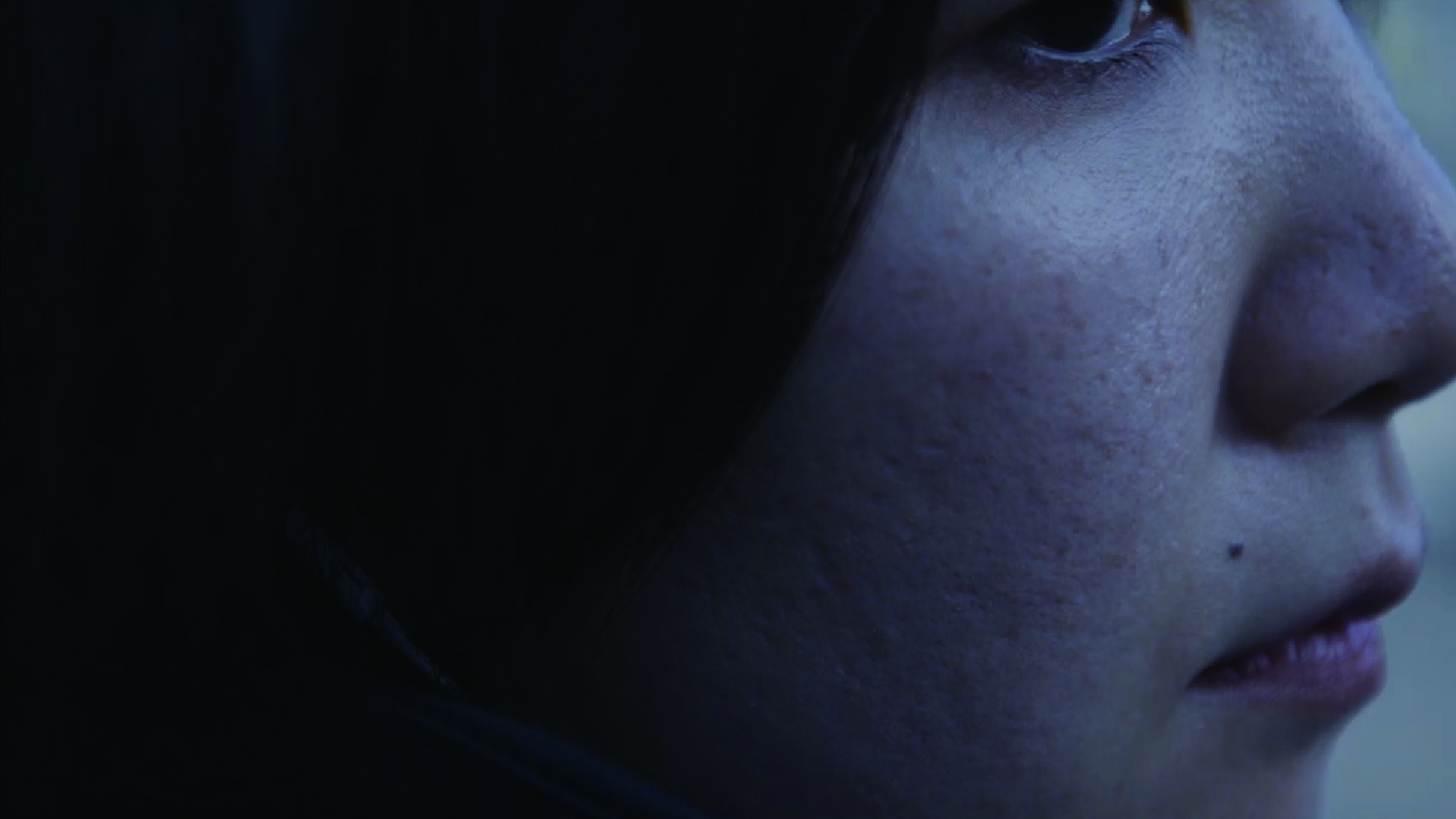
Night Journey (working title)/夜のバカンス
Director: Fukushima Taiga | Running time: 54 min
Saki sits along a busy road on a folding chair. She clicks a counter every time a vehicle passes. Not far away, her friend Misaki does the same as a double checker. They’re so bored they talk on the phone while they count. It’s clear Misaki has lost a sense for the meaning of life. Nonetheless, she begs to keep the job after being reprimanded for chatting. Her boyfriend Nari cuts wood all day, and is scolded for breaking a circular saw. They eat cheap combini food and cakes, a seemingly aimless couple. But Saki has a serious talent for poetry, portraying a fantastic journey above the the traffic she stares at. And Nari is trying to finish a long dormant novel. While Nari is slumbering, Saki goes out on a nocturnal wander, perhaps trying to live out her own poem. Nari reads her words and goes out to look for her. They find each other and meet for the “first” time...
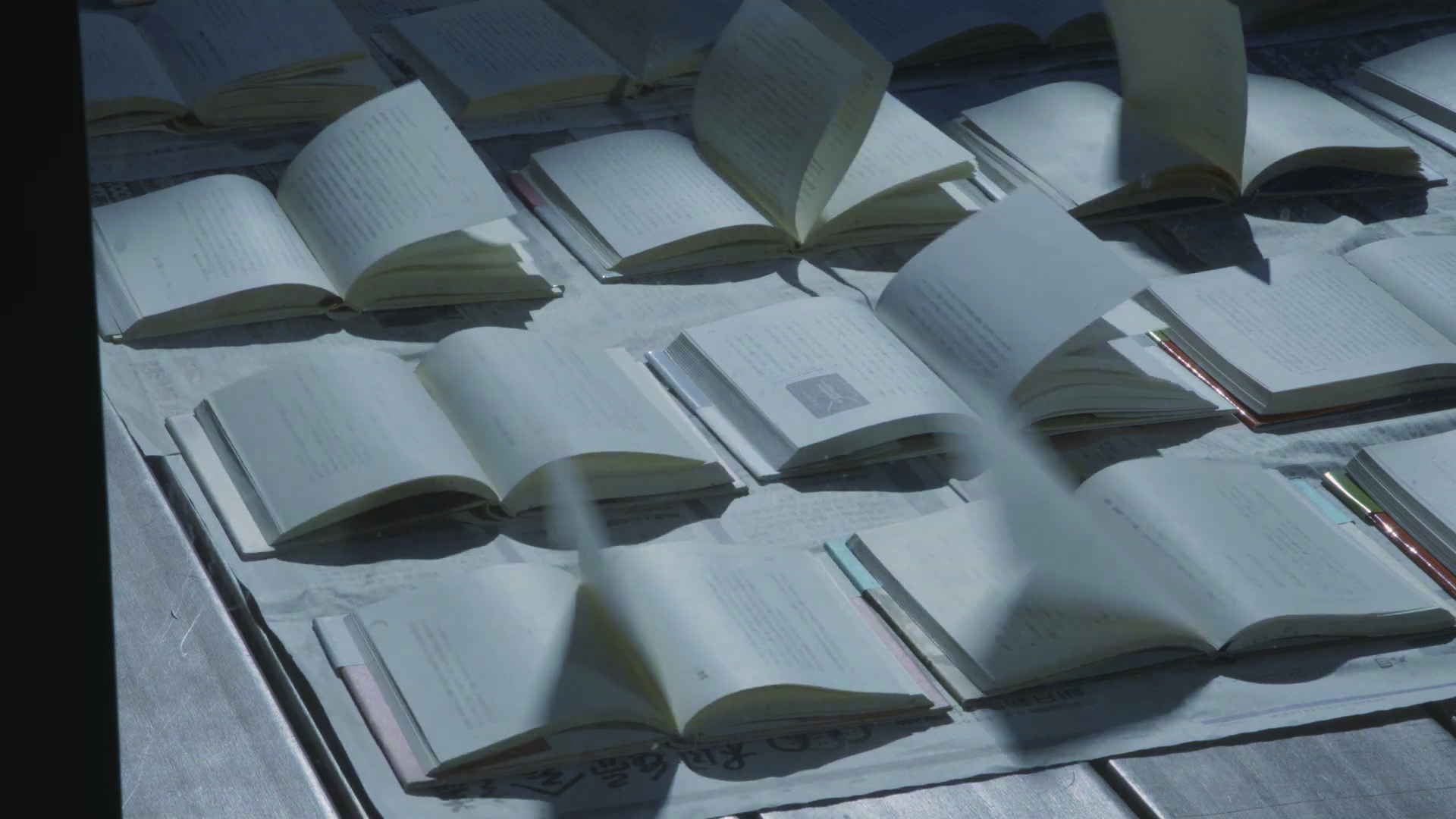
Hibachi (working title)/火鉢
Director: Nakao Waku | Running time: 44 min
A physically and emotionally sensitive young man with deep worries over his home life and work is spending time at his grandmother’s. He calls in sick at the office again and ends up helping his grandmother clean the house –– throwing unwanted items away, watering plants, and airing out his late grandfather’s books. He finds a high school notebook of the sights he’d sketch while being truant. We then follow a teenaged boy in a school uniform who’s cut class and is roaming the very same areas. After grandfather’s shrine is refreshed with offerings and the big cleaning is done, the man discovers the cat has peed in the ceramic hibachi. They clean it and as they’re bringing out the garbage, the wandering boy offers to help. He accompanies the man and his grandmother to burn some wood for ash and find a bamboo blowpipe. Back at home, the boy and the man sit in silence and warm their hands over the hibachi.
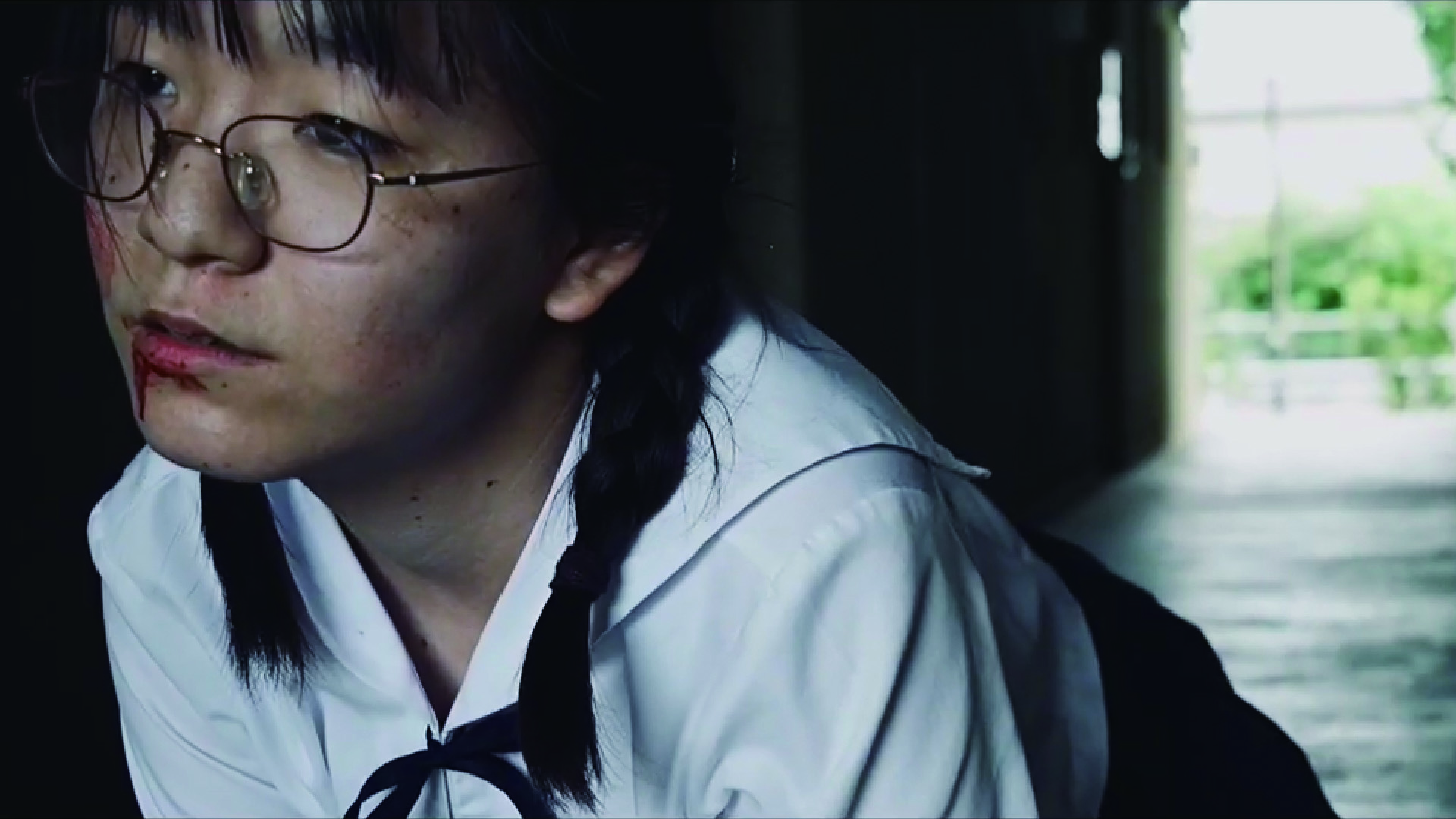
Natsu to Shura (working title)/夏と修羅
Director: Kawamura Yoshino | Running time: 44 min
Sachi texts with her best friend Kyoko in the bathroom at high school. They gossip about a strange girl who calls herself “Becchin” who is rumored to be stealing stuff from other students. Right after, Sachi sees flashes of her hands covered in blood and runs out. Sachi and Kyoko come across Becchin searching in the garbage for her shoes, which were snatched away after she was bullied by some other girls. Sachi offers to help her look, upsetting Kyoko. Grateful, Becchin shows Sachi the secret stash of stolen items. She explains that other people’s cherished objects make her feel cherished. Sachi convinces her to return them so they can be friends. Becchin is overjoyed but Kyoko becomes increasingly angry with the new bond they share, leading to a heated confrontation between Kyoko and Becchin that turns violent. In a dreamlike sequence, footage of everything that happened at school plays as Sachi reveals her childhood trauma and the source of her visions to Becchin.
A New Town
Director: Koike Hayase | Running time: 39 min
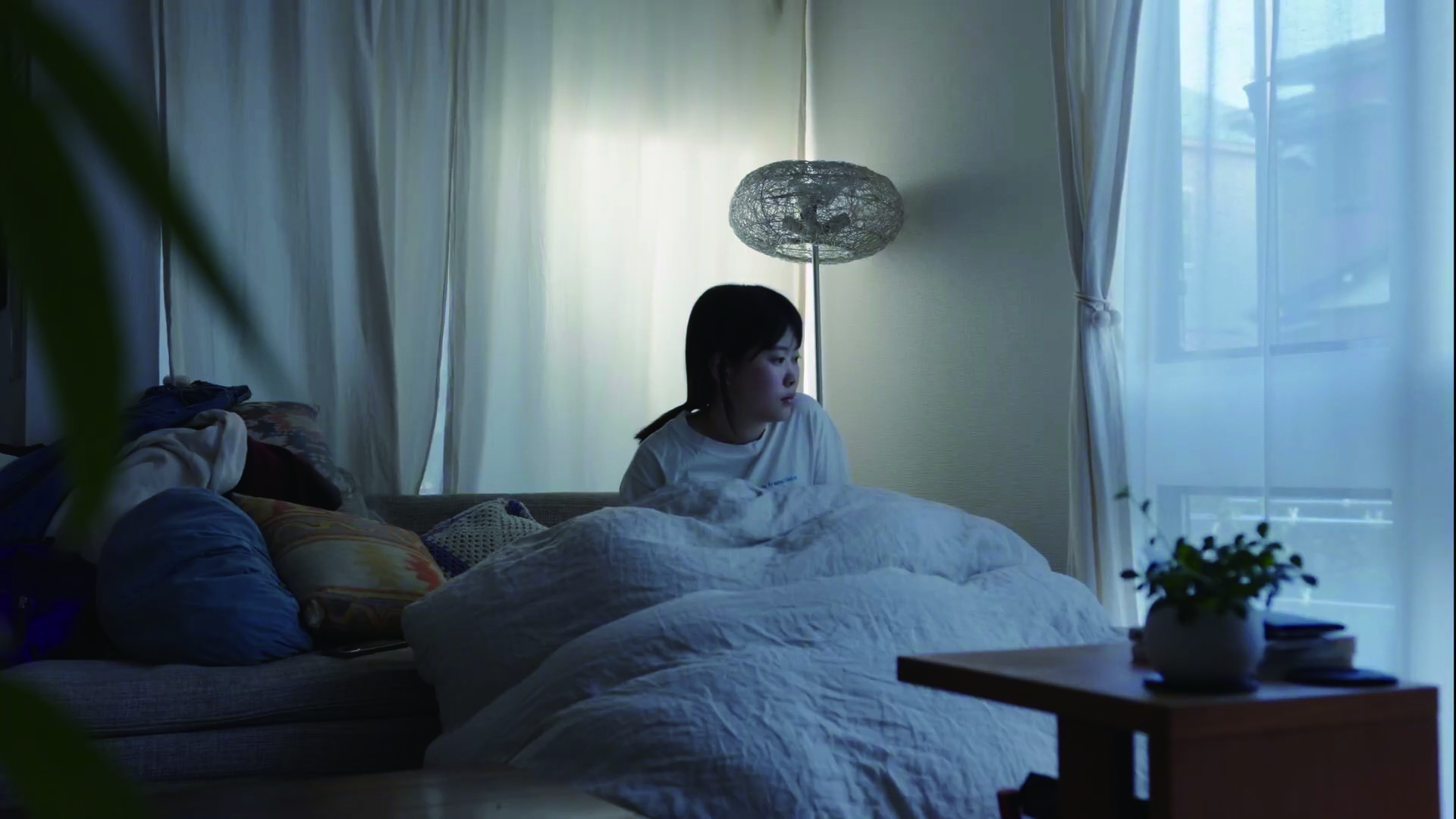
Saku’s dad was a speed bike racer whose career got cut short by a crash. When Saku was 15 and riding on the back of his dad’s motorbike, they had an accident in a nearby tunnel caused by scattered trash after a storm. His dad was never seen again and Saku stays away from the tunnel to this day, still carrying guilt. Shattered, Miho found refuge in buying instruments and composing music at home, eventually turning it into a job. One day, Saku spots a young woman (Yuki) racing away from a man on his stolen bicycle. Yuki gets a flat tire and Miho unknowingly invites her back home to help fix it. Largely unsocial, Saku is uncomfortable with Yuki’s intrusion but the pair begin to bond after she helps him with his university essay on trauma. Saku eventually convinces Yuki to return the bicycle, and in turn Saku realizes this is his own chance to face the past with Yuki’s help.
THANK
Director: Inagawa Yuji | Running time: 32 min
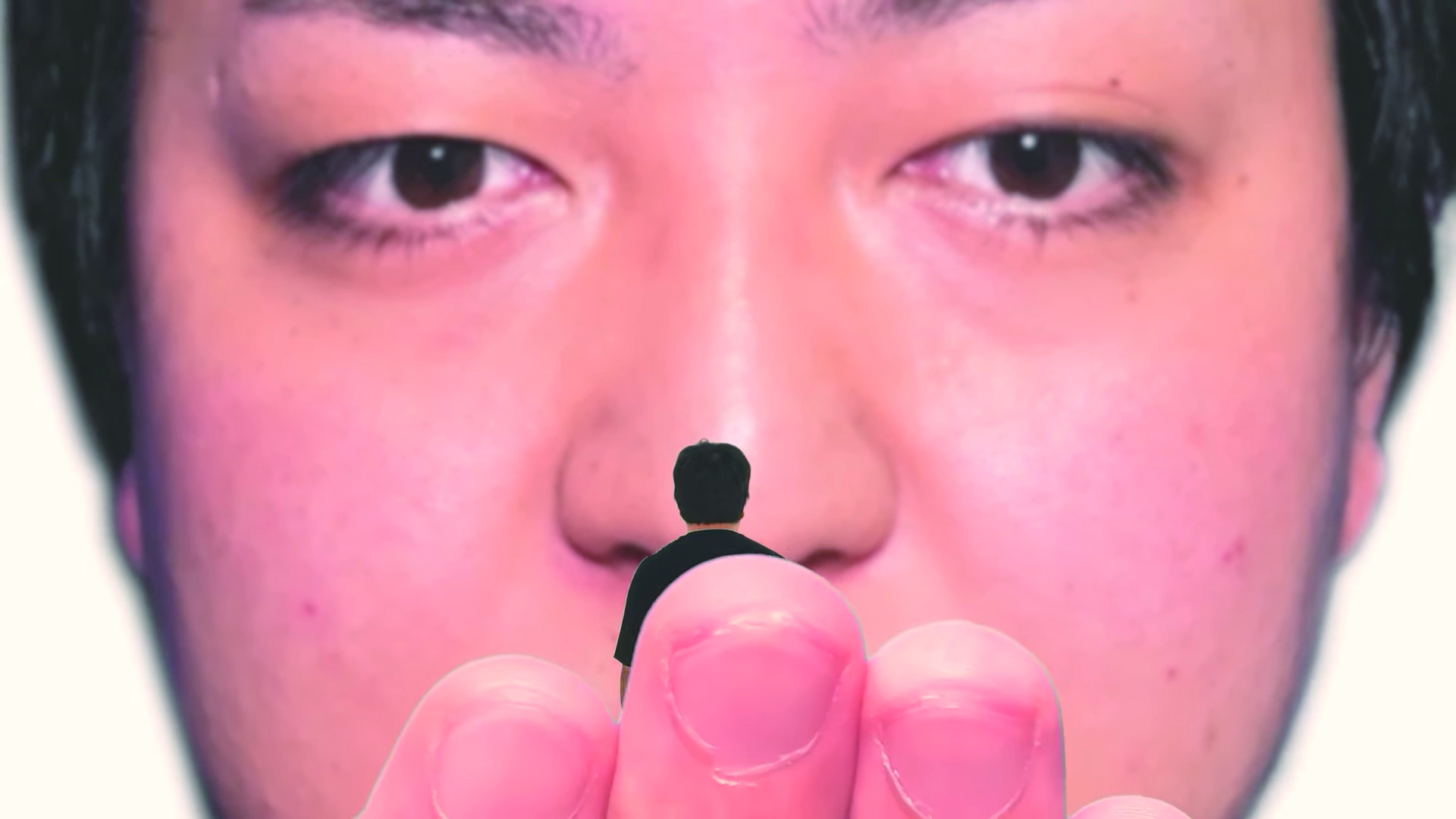
A young man comes home to find that his key no longer opens the door. Confused, he makes a call at a payphone, promising to pay his debts. On the other end, his girlfriend expresses disappointment at how things have ended. The man gets on his bicycle and pedals through the chaos and construction in the city. He steals a car and ventures into the countryside, where he takes in the beauty of sunlit nature. Amazingly, he then dons a helmet and shoots off into space. In a blinding white infinity, he thanks the sun on behalf of the earth. In a booming voice, the Sun God questions his every thought. It sets off a heated, Zen Buddhist koan-influenced debate on the existence of one thing in relation to another. There can be no winner. In pain and homesick, the man ultimately realizes who his interlocutor is –– himself. Back on the beautiful earth, the man makes another call...
RUN/自由研究事変
Director: Matsubayashi Miwa | Running time: 28 min
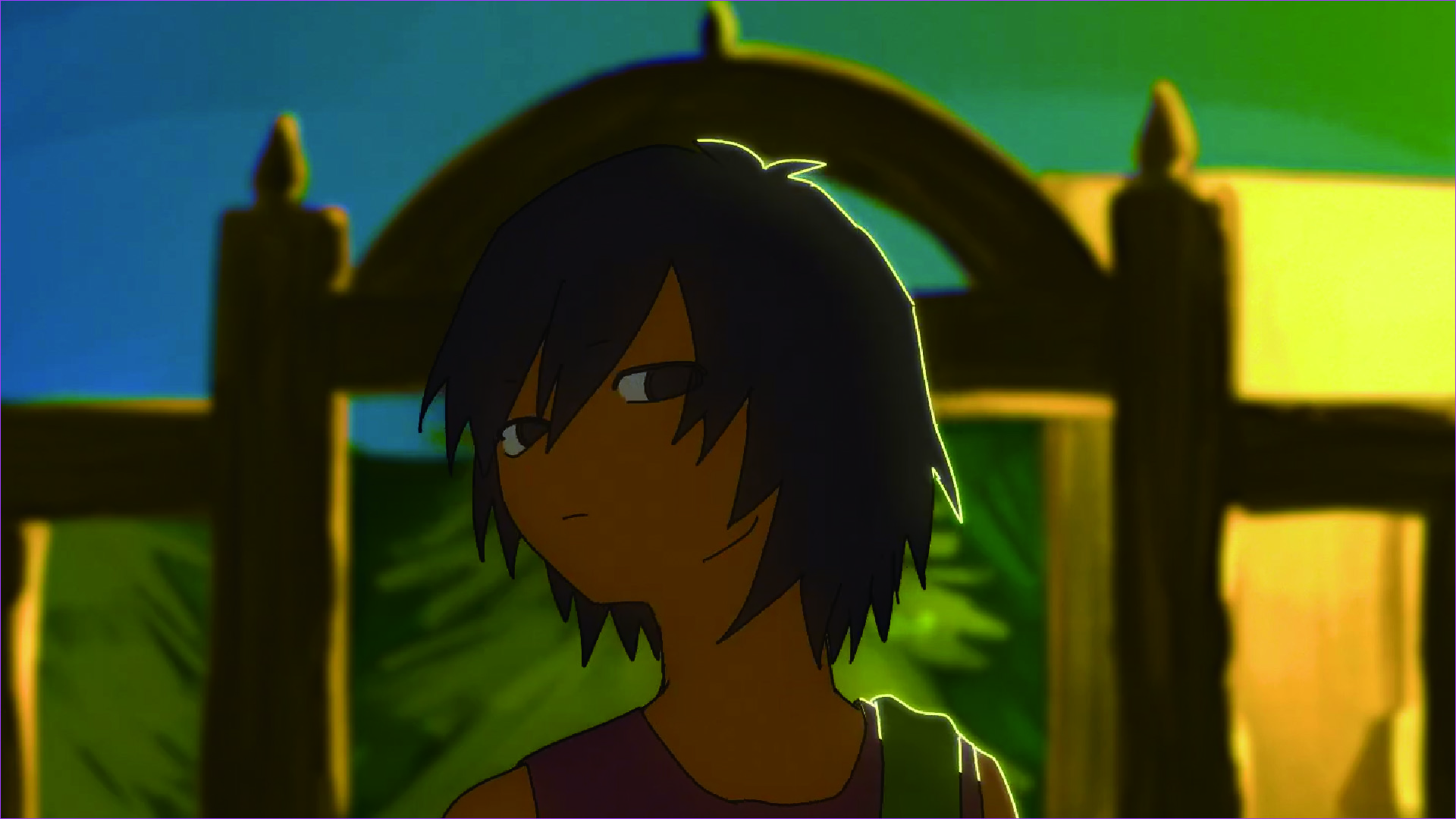
In the far future, high school student Koratta scoffs at a lecture on fantastical water-based life in a previous incarnation of earth. Before he barges out, his teacher tells him to carry out an independent research project instead. Outside, he’s followed by a boy with amphibian-like ears. He’s curious to know more about Koratta’s skepticism and shows him his aquariums of amazing fish. He invites Koratta to explore a strange, abandoned facility far below the grassy meadows which leads to an underground sea. As they dive down, they encounter ruins of human civilization (including the Statue of Liberty). After reaching the dark sea floor, Koratta is exposed to the blinding light of a giant sea creature and becomes violently ill, triggering visions of the horrors of ancient wars and human suffering. They’re able to escape and awaken in the world above. The pair happily make plans to go on another independent research outing, but Koratta realizes something remains from the last journey...
Waiting for Mom (working title)/おむかえ
Director: Miyake Miwako | Running time: 27 min
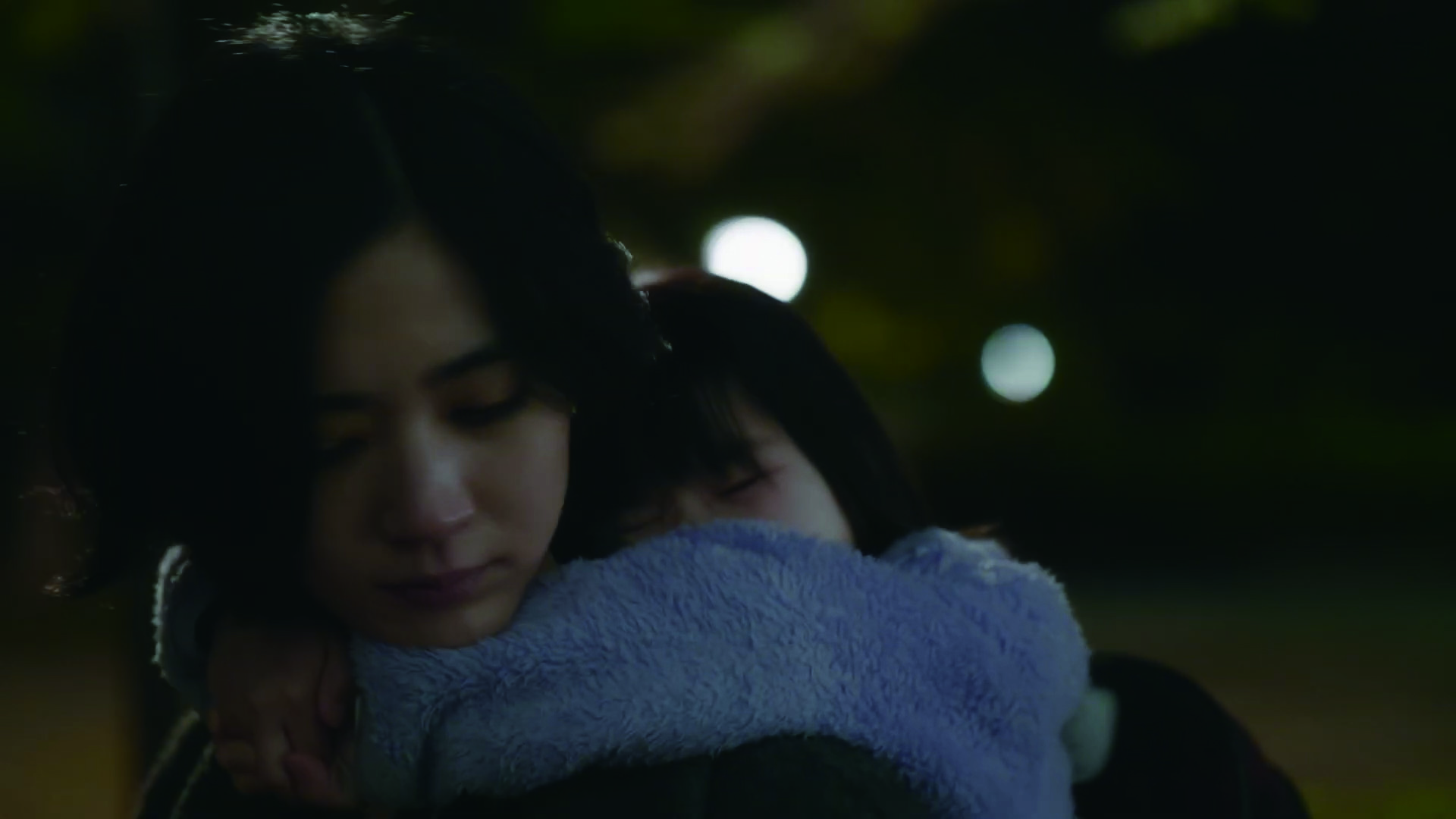
A working single mother picks up her daughter Hana on her last day at kindergarten. At home, Hana sadly tapes up a crayon drawing of her best friend in class, whom she won’t see again. Her mother sings her a lullaby before working a night shift, promising to come home before Hana wakes up. Soon after, her mother drops her off at an overnight daycare center. The decision weighs heavily on her mother’s heart, but she has no choice. Hana catches the eye of a young boy at dinner, but she’s reluctant to make a new friend she’ll have to leave. After bedtime, Hana waits in the dark for her mother to show up as other parents arrive first. Her mother finally arrives, and uncomfortably requests that next time the staff carry Hana to the school entrance so she doesn’t wake up. As they walk through the nearby park at night Hana lets her feelings out and the two share a tender moment.
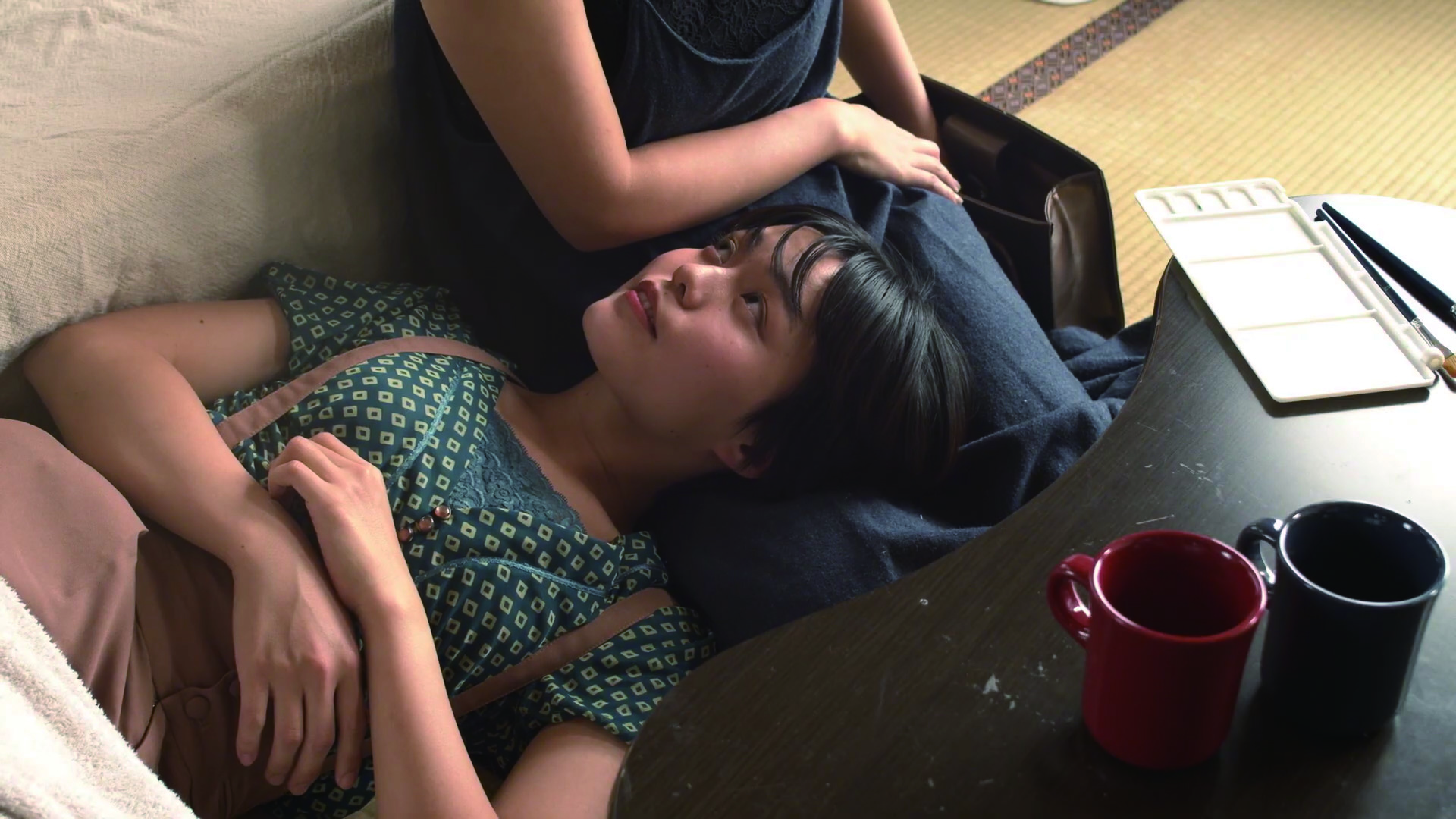
Blue Octopus Day (working title)/ブルーな蛸の日
Director: Waki Saria | Running time: 22 min
Life at her boyfriend’s has become tiring for Azusa. She doesn’t want to wash his underwear any longer. Plot twist – he says he’ll move out and let her take over the house. Azusa eventually throws away some of his remaining possessions, but can’t toss out the coffee mug they enjoyed using. Some time later, a male acquaintance ends up crashing over and they sleep together. Azusa gets him to forge a signature on a university leave of absence form so she can move to Poland. She in turn leaves the house to him! He inherits the mug and happily washes Azusa’s panties and hangs them up to dry, to the chagrin of his pesky younger sister who ends up staying and inviting over yet another female friend. Things come full circle when the original boyfriend returns with intentions of tracking down Azusa in Poland. But a recited dream and a can of paint fuel a surreal turn at the house...
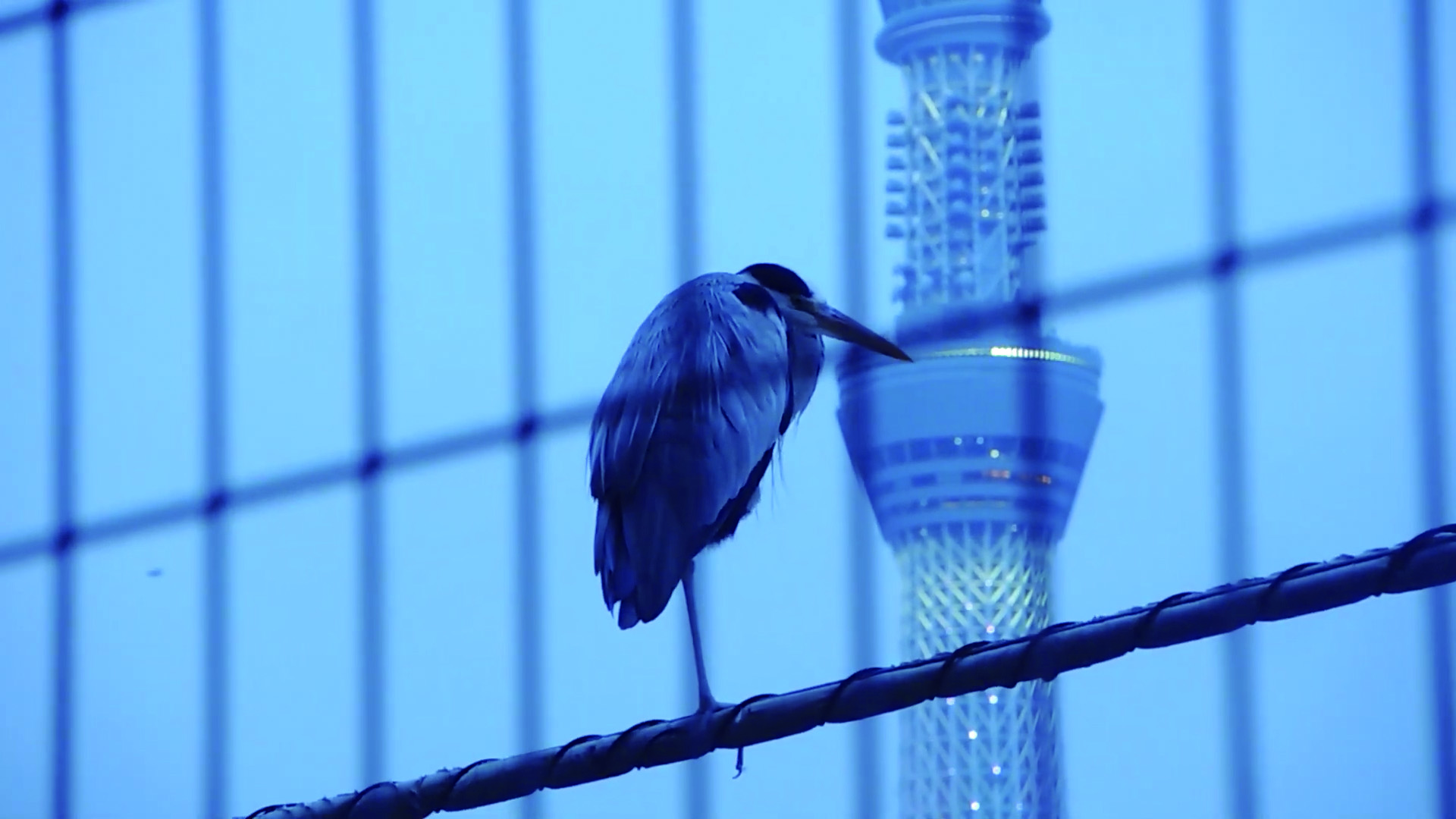
Mother, A Long Red Night/母、長く赤い夜
Director: Wakabayashi Michiru | Running time: 15 min
The film opens with the a poetic excerpt from the journal of writer Noguchi Seiko expressing the icy depths of the heart and the nature of death, over a rippling reflection of a tree. Then we are below the shifting colors of Sumida Ward's Sky Tree at night, hearing the happy voices of children. The placid image is accompanied by voiceover narration from Morikawa Sumiko's famed account of the devastating 1945 Tokyo air raids as she tragically attempted to rescue her three young children amidst the flames in the very same district (then known as Honjo Ward). The words of 18-year-old student solider Suda Takuo, whose job it was to collect the bodies of the dead, appear on screen. He recalls the horrific discovery of a deceased child in its kimono, still holding the breast of its dead mother. We return to Morikawa's narration and more images from the Sumida river's gentle, reflecting waters in what was the heavily bombed area of east Tokyo.
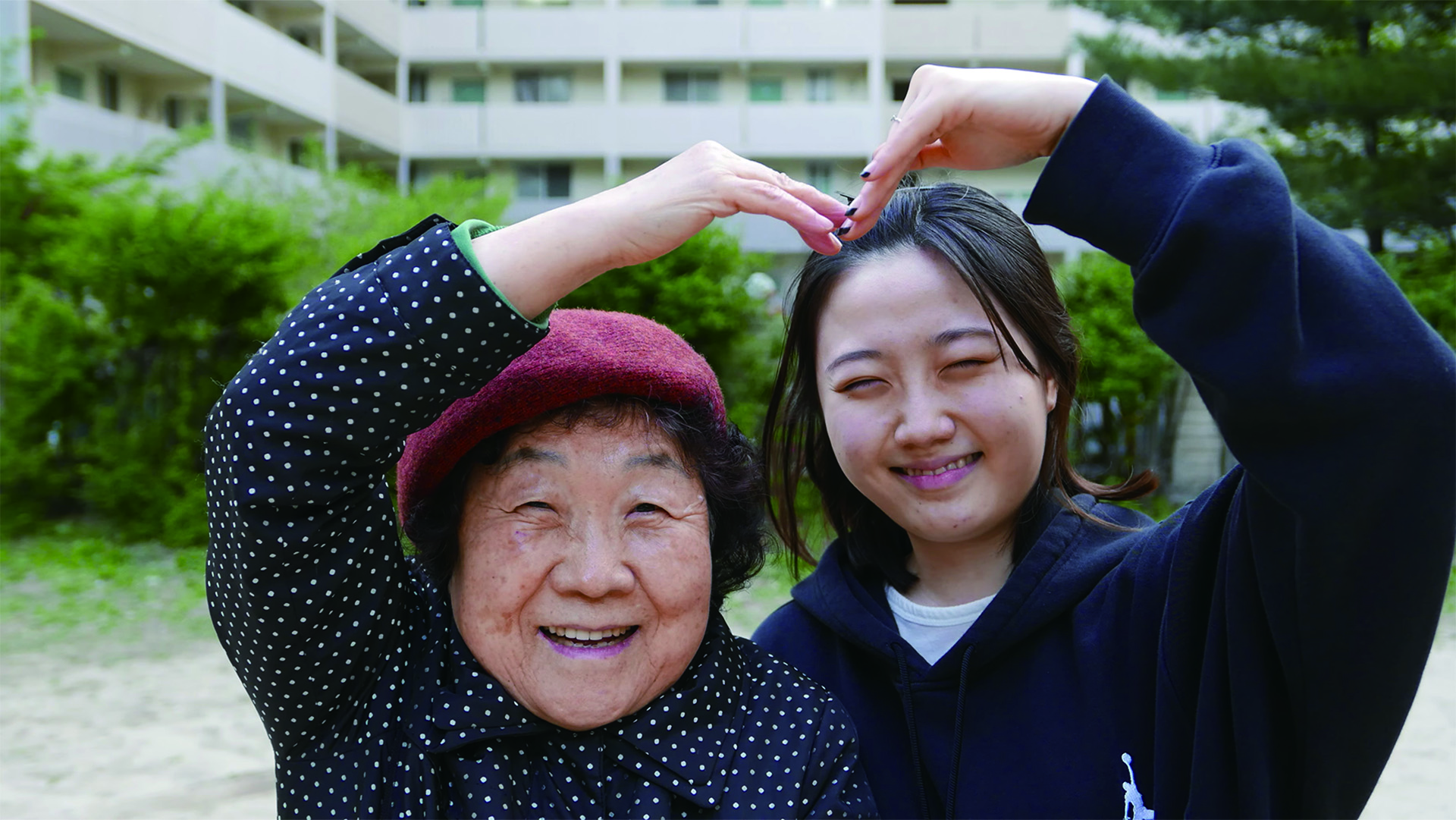
Melancholy Regrets/切ない後悔
Director: Jung Wani | Running time: 14 min
The film opens with a clearly stated theme derived from two entries in the Korean dictionary – the two words of the title. The intertitles helpfully explain that once the two words were selected that the story came in an instant –– a tale of a grandson who regrets ignoring his sick grandmother until it was too late. "The ending will make audiences and the judges cry! It will win prizes at film festivals!" it boasts, with Kore-eda inspired storyboards. Shooting of grandma's scenes commences. She eats, waters the plants, and watches TV, but doesn't quite seem as miserable or unhealthy as she "should". She browses an old photo album and has absolutely no regrets in her life, even if things were difficult at times. The director is plagued with doubt and pauses production, calling off her cousin's scheduled shoot even though he changed his hairstyle. Is the film losing its purpose? No, it's more valuable than the director even imagined...
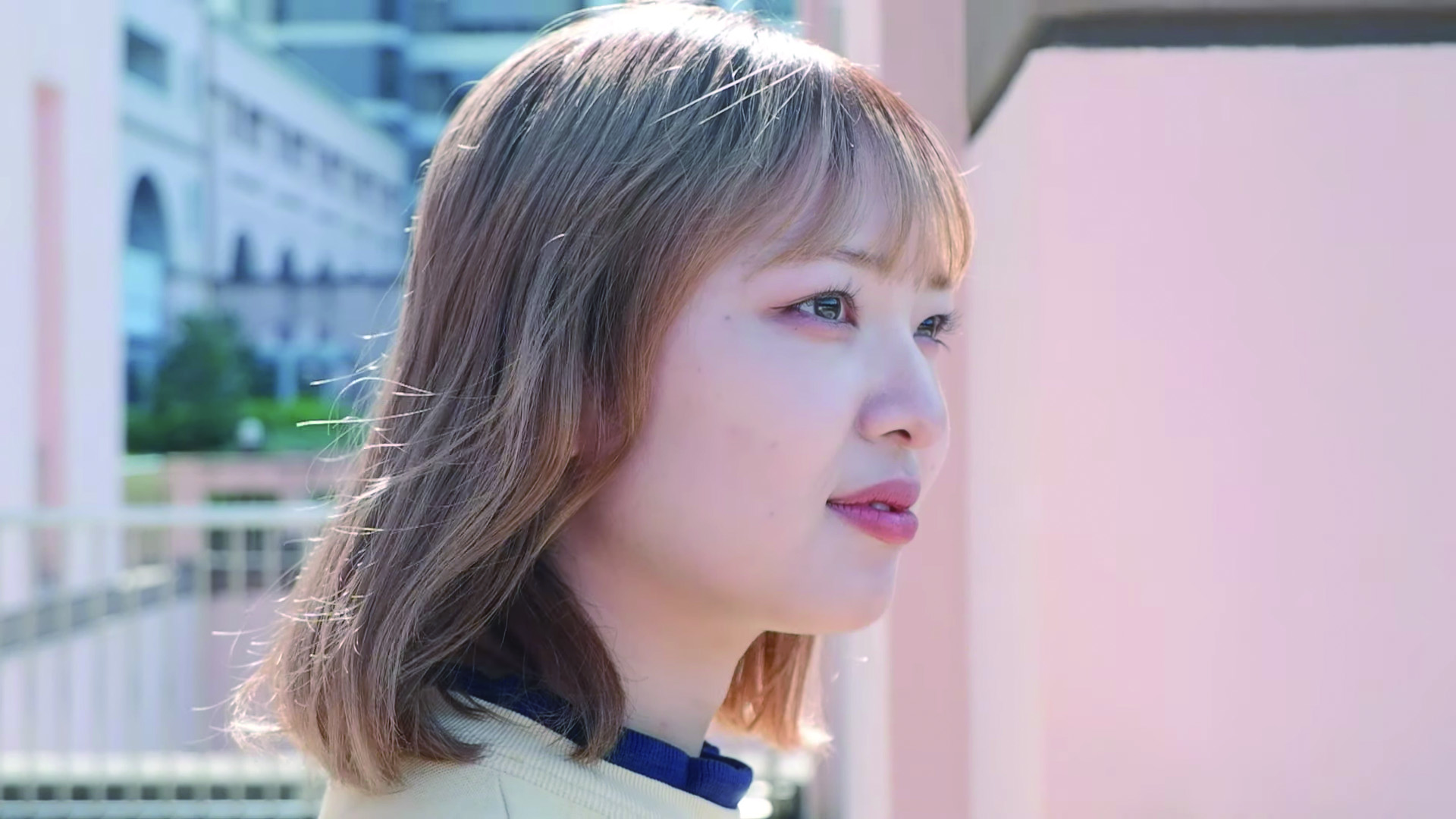
Our World is a Stage (working title)/ささげにささげて
Director: Hayakawa Hisano | Running time: 14 min
On a university campus, the flyer for a theatre play is taken down and a young woman walks away in a hangdog manner. Another girl runs out, excited to see her. Matsui and Toki are old friends from high school, but had lost touch until today's event. They share some of the sweets Matsui brought as a tasty precursor to rehashing their high school days. Although Matsui gave up on writing and acting in plays, she's impressed with Toki's perseverance and the lead performance she just witnessed. Toki reveals it was Matsui who inspired her to join the theatre club in high school, which changed her life. Toki asks Matsui if she'll take up theatre again. "When I see someone who truly loves it like you, I can't help but realize that's not me," she admits. The pair get caught up in trying to remember the sequence of an old word game they used to play, further reigniting their bond.
What remains (working title)/残るものについて
Director: Yashiki Yuto | Running time: 12 min
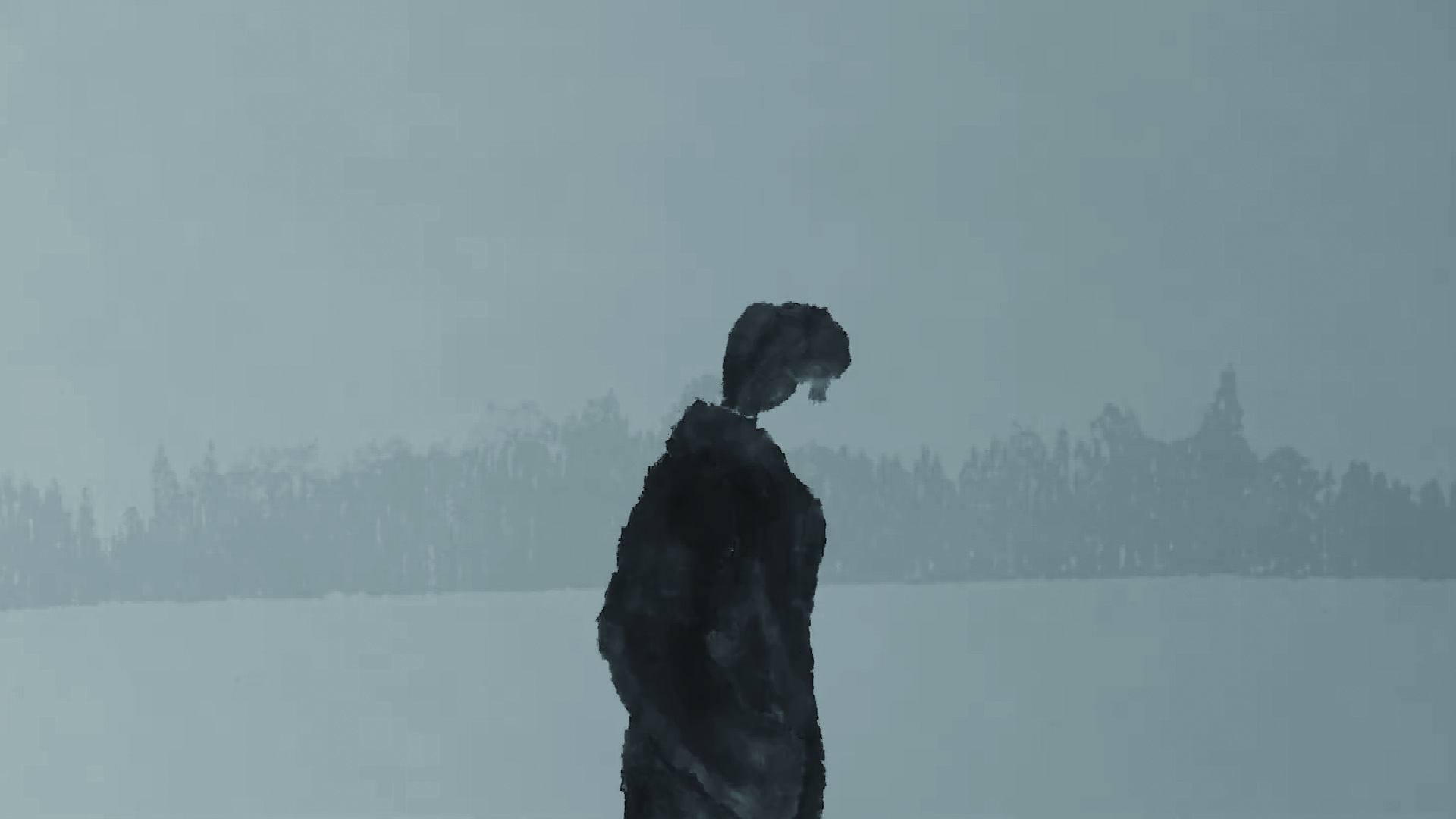
A man in a winter overcoat traverses a barren, snowy landscape at night. He comes across a lone cabin and seems to break in. Or is he home? His mother welcomes him tells him to rest in his old room. She recounts his childhood activity of climbing the sakura tree on the property to tie pinwheels to the branches. The days pass as they help each other – drawing water from the frozen well, cooking, repairing clothes, surviving. But something seems to weigh heavily on the man. One day, as the woman lies weakly in bed, he reveals a stark truth. "Yes, I already knew," she replies. They share two points of view on the same childhood memory that has left an indelible impression on them. Spring slowly encroaches and the sakura tree in the yard takes on even greater significance as the man journeys once again into the white.
The Fourth-Dimensional Devil/四次元悪魔
Director: Hseueh Dayung | Running time: 11 min
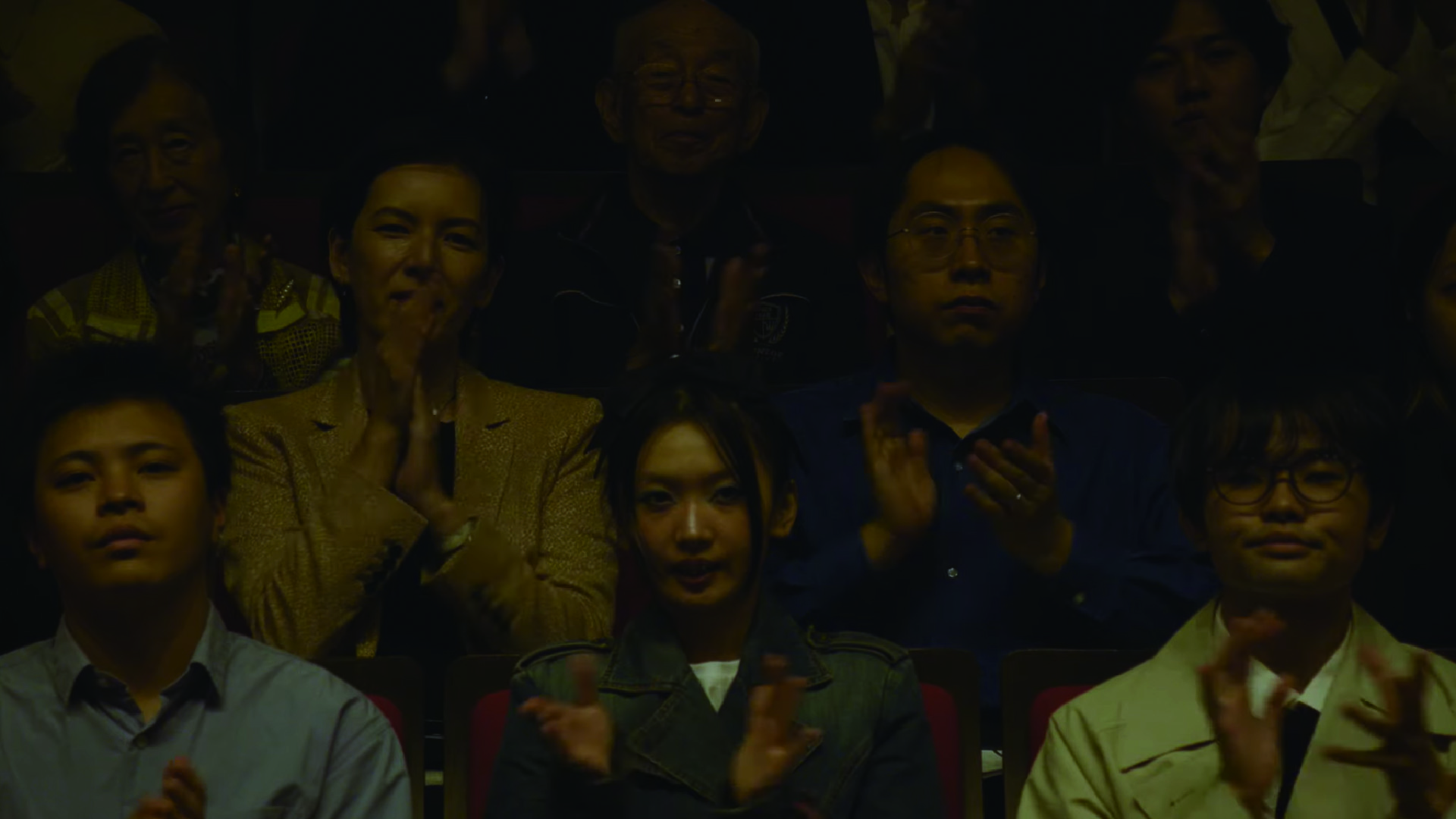
A classical concert is about to commence. Two Taiwanese music students run into each other in the lobby and catch up. One of them has gotten married, and the other is heading back to Taiwan. They're both here to meet their old teacher, Ke-sensei. They wonder about a third former classmate, Da Yong, who quit music but still has the guts to show up. He arrives late, and by chance yet another former classmate, Kurita, is working as an usher and guides him to the auditorium. Da Yong finds the music annoying, instead ruminating over why he quit. Was it because Kurita was too talented? No. Playing music was a heavy burden. Post-concert, the three Taiwanese students and Ke-sensei gather and chat. Ke-sensei absolves Da Yong of his guilt and moves off to speak with Kurita. The conversation surprisingly turns to sensei's habit of biting his students. Moments later, a sudden and shocking turn of events unfolds.
21st Arrondissement of Paris/パリ杉並区
Director: Shibuya Keiichi | Running time: 11 min
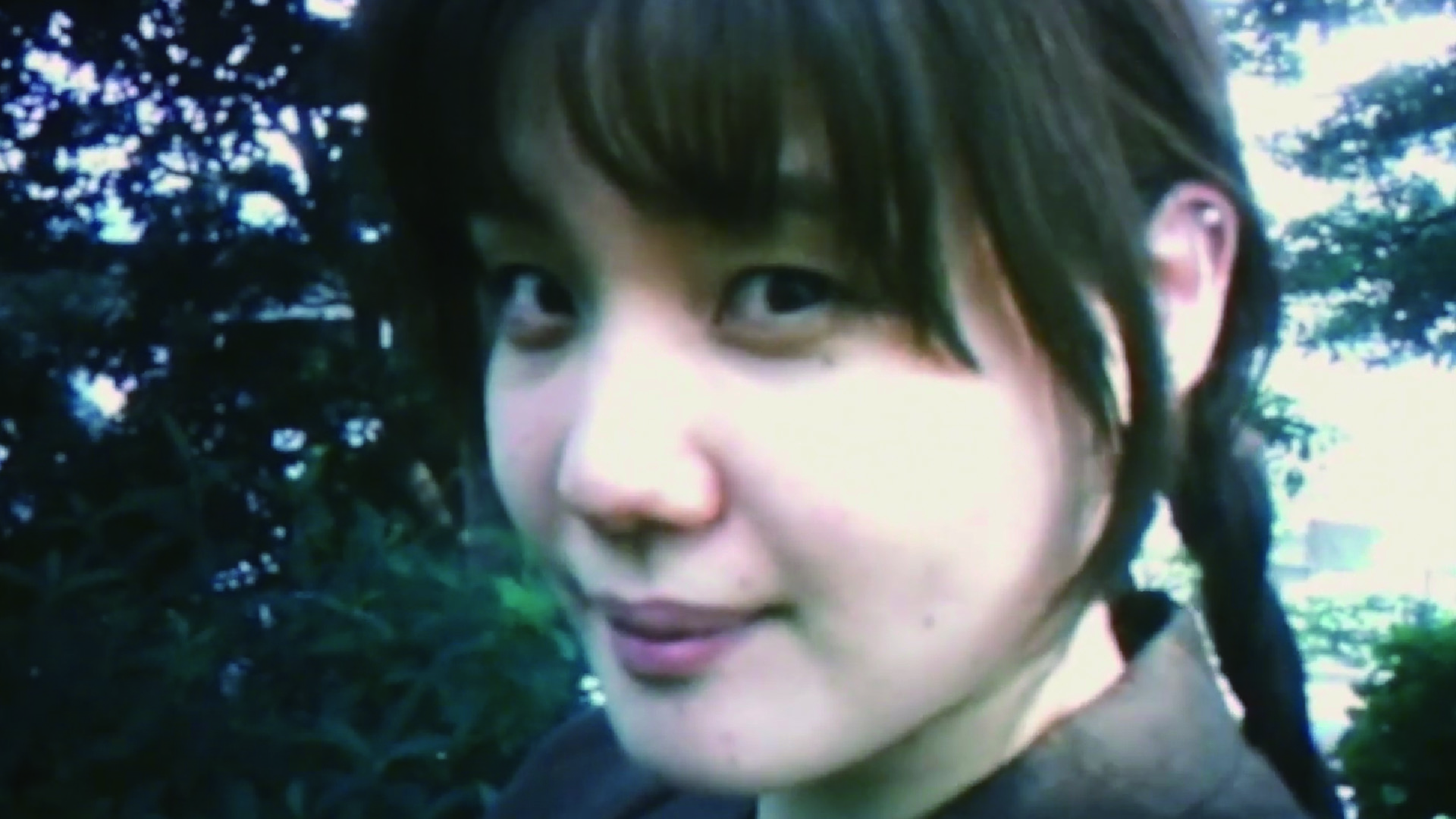
In the additional 21st “Suginami” arrondissement of Paris, Krala (Clara) was always called a charlatan and a fibber as a child but now she’s a young woman living in her own self-styled reality. “Couldn’t I at least be regarded as a poet?” she wonders. Without a lover or friends, life in her patch of Paris is unbearably boring. She hits on the idea to launch a detective agency and goes out flyering and knocking on doors to no avail, but she’s not discouraged. When a frog puppet named Romain appears in the local park requesting her services they go on a quest to find him a friend, but it’s not meant to be. Without any new customers calling, Clara asks her own agency for advice and orders herself to get outside and find her own cases. The pair come across an abandoned set of swings and a troubled-looking man in a soaked, frog-green polo shirt. Now it all starts to make sense.
Dates: 18-26 September 2026
Venue: National Film Archive of Japan
The Pia Film Festival in Kyoto 2026
Dates: 5-8 November 2026
Venue: The Museum of Kyoto
Films in the PFF AWARD COMPETITION 2026
Beside/隣に
★Grand Prize and Cinema Fan Prize
Director: Seike Takashi | Running time: 33 min
20-something freeter Kojima comes home and finds his mother in an unconscious state in bed. He asks his similarly aged neighbor Yokota to come over and look at her. Although Yokota is studying for a medical school entrance exam, he’s reluctant to assess someone in the real world. Unfortunately, there don’t seem to be any signs of life, and Kojima reveals her doctor hadn’t given her long to live. While the pair wait for her regular doctor to arrive, Yokota speaks well of Kojima’s mother’s neighborly exchanges in the past and her homemade lemonade. Kojima dissuades him from pointless niceties, triggering a protracted self-examination of how they’ve dealt with their parents and indeed how they’ve ultimately defined their own identities by what they elect to say, or leave unsaid. Kojima’s mother suddenly awakens. She has a lot to convey herself, adding a more heartfelt perspective to the dynamic. Several months later, some things have changed but perhaps others haven’t...
The Perfect Body★Runner-up Prize
Director: Nakashima Kiri, Konishi Juntaro, Kinoshita Yusuke | Running time: 30 min
At a remote Antarctic laboratory, researcher Dr. Kobayashi injects himself with the long-awaited serum for the “perfect body” he’s been dreaming of. Two decades after World War 8 has ended, a new “Kumamusian” race exists –– half human half tardigrade. A human water bear! A Kumamusian boy living the high life driving fast cars and playing rock guitar gives a special energy drink to a boy named Pokku. Pokku is horrified when his hand morphs into a water bear appendage. He wants to remain human. Meanwhile, Dr. Kobayashi has transformed into a giant, deformed water bear through over-injection and aims to convert all of humanity and take over the galaxy. Pokku gets help from his movie club buddies to track down Dr. Kobayashi’s former lab assistant, who holds the antidote. But they’re kidnapped by Dr. Kobayashi, who’s gathering his forces for the final takeover. Can the Kumamusian boy’s rock music help save the world in time?
So He Grabbed the Knife/そしてナイフを手にした★Special Jury Prize
Director: Kuwa Sam | Running time: 12 min
A father returning home from an overseas business trip gives his son Yang Yang some Belgian chocolate, a German cuckoo clock, and a Swiss knife. Yang Yang sometimes has dinner alone if his parents are out playing Mahjong. He’s a latchkey kid in a neighborhood with increasing incidents of youth violence and his dog is his only true friend. Yang Yang likes playing fighting arcade games but his father bans him from hanging out there with “the bad kids” such as his delinquent acquaintance Ryu. As Yang Yang’s rebelliousness grows, he steals his dad’s ID to go to a cyber café. Meanwhile, his father abandons the dog in the woods for biting other family members (but never Yang Yang). He also smashes open his son’s briefcase of private items and discovers the ID, which is the straw that breaks the camel’s back. Yang Yang grabs his Swiss knife and goes out in the neighborhood with his emotions running hot...
Outlines (working title)/輪郭★Special Jury Prize
Director: Hatsumi Hirotaka | Running time: 29 min
An elderly man alone in his modest house makes a call on his flip phone. He asks his son Hirotaka to come over because the son’s mother is away working. He needs help and some food. The son drives over and his father launches into a tirade about how demanding his wife has become over his condition – Why couldn’t he have trained himself better when he lost his sight so he could work? He’s pleased that his son doesn’t complain like his wife, but Hirotaka is feeling pressure over his absences from his girlfriend and has concerns about the future (“Is your condition hereditary?”). When his father asks him to help throw away some old stuff, Hirotaka finds a camcorder and tapes. They watch home videos of Hirotaka’s youth together, when his dad was still a healthy young man. Hirotaka has to go home, and leaves his father sitting in the dark. The next day, his father makes a small but life-changing decision.
You don't have to understand me!(working title)/わからなくていいよ!★Special Jury Prize
Director: Shibata Hina | Running time: 57 min
Matsu runs frantically through the night while her boyfriend Watage drives in search of her. She's angry that he didn't listen to her with full attention. He promises to be a better listener. The next day, Matsu goes through her daily domestic routine: cleaning, garbage, laundry, cooking, dishes, watering plants, and taking a bath. While she listens to her favorite radio broadcast, she boils some barking deer bones she had collected. When Watage comes home he creates different set of sounds that clash with her content wavelength – making coffee and drying his hair. The sounds of workmen outside drone on. At night, Watage snores up a storm and Matsu can't take it any more. They clean the bones together, and he proves to be proficient at it. He ignores her once again in his concentrated state, infuriating her. Matsu takes off into the night, but this time Watage joins her and they synchronize with a primal force.
A heartless game (working title)/薄情なゲーム
★HoriPro Prize
Director: Mizote Ren | Running time: 63 min
Saho and Hikaru have been going out for around a year, and Saho spends a lot of time at Hikaru’s place. One morning, her photo modeling friend Hana visits and asks if Saho has said anything to Hikaru about “you know what,” meaning the fact that Saho still has feelings for her photographer ex-boyfriend Yukito. She hasn’t. Yukito and Saho meet at a café to discuss an upcoming photo shoot by the ocean, when Yukito’s current girlfriend Chihiro spots them and uncomfortably joins the conversation. She agrees to assist, and Saho convinces Hikaru to use his car to get them there. The quartet pass the day at the seaside as feelings and truths seep out. When they return to Hikaru’s place to close out the night, thinks get increasingly uglier after Hikaru is enraged by Yukito and Saho’s flirtation. He kicks them out and is left with Chihiro and things will never go back to the way they were...
The Outer Persona (working title)/ペルソナと俺
★Soaring Together Prize
Director: Fujii Tomoya | Running time: 23 min
Teenage online gaming addict Monjiro can only bear to look at himself through his cute centauress-like avatar. While playing a virtual racing game, he crashes and burns and gets a life-changing zap of energy to the head. There in his bedroom, he comes face to face with the avatar. His gaming mentor Tamura visits and explains that the servers are over capacity and avatars are bleeding into reality. Tamura gets an idea to monetize the situation and sends out a mass mailing corporate pitch, but the only response is a rejection. Overnight, Monjiro transforms into a half digital, half biological spider-like creature. Tokyo is overrun with digital trash, with a huge mecca emerging from the detritus as Tokyo’s third great tower. Tamura, the corporate figure (who is in fact a national security agent) and the cute avatar work to save Monjiro and stop the digital devastation. In the end, will something shift within Monjiro in the human world?
George's Happy Romance/ジョージのハッピーロマンス
★Audience Prize
Director: Ichikawa Yuto | Running time: 53 min
“George” suffers from alopecia and is completely bald (eyebrows included). He pens a description of himself in English as “so bald his head reflects the sun like solar panels.” He works myriad part-time jobs to save for a trip to the US, but hasn’t told his indie actress girlfriend Sayaka. He explains to his best friend “Franz” that it’s for business school. The latest job takes George, Franz and “Saudi” guy Amir to Lake Yamanaka to help dig for historical artifacts. It’s clearly pointless but group leader Yoko has a dream – to find the gold bullion her soldier grandfather may have buried in the woods. At night, George meets local girl Aoi – granddaughter of his digging boss –– at a karaoke bar and falls in love after one date. While he accompanies Yoko on her last ditch effort to find the treasure, Sayaka shows up looking for answers. But it’s at Shibuya’s famed crossing that we witness what George’s true calling is...
BADLAND
Director: Isshiki Sakura | Running time: 82 min
Sachiko is an art college student who works a string of part time jobs but can barely make ends meet, and her mother can’t bail her out any longer. Frantically running from classes to workplaces is her daily norm. She hands out fitness club tissues at the station, shapes dental molds, and washes dishes at a café, enduring the monotony of each task so she can pay her utility bills and for art supplies. In her English comprehension class there’s a hint of attraction between Sachiko and her classmate, who is the diametric opposite: prepared, studious, and focused. They visit a museum on a date but ultimately they’re on different wavelengths. Sachiko’s financial situation worsens and her health is compromised –– her running drives her to collapse. She hears strange noises from the apartment below and days later comes home to find a cordoned off crime scene. Despite her trying circumstances, Sachiko keeps grinding, determined to finish her painting.
Night Journey (working title)/夜のバカンス
Director: Fukushima Taiga | Running time: 54 min
Saki sits along a busy road on a folding chair. She clicks a counter every time a vehicle passes. Not far away, her friend Misaki does the same as a double checker. They’re so bored they talk on the phone while they count. It’s clear Misaki has lost a sense for the meaning of life. Nonetheless, she begs to keep the job after being reprimanded for chatting. Her boyfriend Nari cuts wood all day, and is scolded for breaking a circular saw. They eat cheap combini food and cakes, a seemingly aimless couple. But Saki has a serious talent for poetry, portraying a fantastic journey above the the traffic she stares at. And Nari is trying to finish a long dormant novel. While Nari is slumbering, Saki goes out on a nocturnal wander, perhaps trying to live out her own poem. Nari reads her words and goes out to look for her. They find each other and meet for the “first” time...
Hibachi (working title)/火鉢
Director: Nakao Waku | Running time: 44 min
A physically and emotionally sensitive young man with deep worries over his home life and work is spending time at his grandmother’s. He calls in sick at the office again and ends up helping his grandmother clean the house –– throwing unwanted items away, watering plants, and airing out his late grandfather’s books. He finds a high school notebook of the sights he’d sketch while being truant. We then follow a teenaged boy in a school uniform who’s cut class and is roaming the very same areas. After grandfather’s shrine is refreshed with offerings and the big cleaning is done, the man discovers the cat has peed in the ceramic hibachi. They clean it and as they’re bringing out the garbage, the wandering boy offers to help. He accompanies the man and his grandmother to burn some wood for ash and find a bamboo blowpipe. Back at home, the boy and the man sit in silence and warm their hands over the hibachi.
Natsu to Shura (working title)/夏と修羅
Director: Kawamura Yoshino | Running time: 44 min
Sachi texts with her best friend Kyoko in the bathroom at high school. They gossip about a strange girl who calls herself “Becchin” who is rumored to be stealing stuff from other students. Right after, Sachi sees flashes of her hands covered in blood and runs out. Sachi and Kyoko come across Becchin searching in the garbage for her shoes, which were snatched away after she was bullied by some other girls. Sachi offers to help her look, upsetting Kyoko. Grateful, Becchin shows Sachi the secret stash of stolen items. She explains that other people’s cherished objects make her feel cherished. Sachi convinces her to return them so they can be friends. Becchin is overjoyed but Kyoko becomes increasingly angry with the new bond they share, leading to a heated confrontation between Kyoko and Becchin that turns violent. In a dreamlike sequence, footage of everything that happened at school plays as Sachi reveals her childhood trauma and the source of her visions to Becchin.
A New Town
Director: Koike Hayase | Running time: 39 min
Saku’s dad was a speed bike racer whose career got cut short by a crash. When Saku was 15 and riding on the back of his dad’s motorbike, they had an accident in a nearby tunnel caused by scattered trash after a storm. His dad was never seen again and Saku stays away from the tunnel to this day, still carrying guilt. Shattered, Miho found refuge in buying instruments and composing music at home, eventually turning it into a job. One day, Saku spots a young woman (Yuki) racing away from a man on his stolen bicycle. Yuki gets a flat tire and Miho unknowingly invites her back home to help fix it. Largely unsocial, Saku is uncomfortable with Yuki’s intrusion but the pair begin to bond after she helps him with his university essay on trauma. Saku eventually convinces Yuki to return the bicycle, and in turn Saku realizes this is his own chance to face the past with Yuki’s help.
THANK
Director: Inagawa Yuji | Running time: 32 min
A young man comes home to find that his key no longer opens the door. Confused, he makes a call at a payphone, promising to pay his debts. On the other end, his girlfriend expresses disappointment at how things have ended. The man gets on his bicycle and pedals through the chaos and construction in the city. He steals a car and ventures into the countryside, where he takes in the beauty of sunlit nature. Amazingly, he then dons a helmet and shoots off into space. In a blinding white infinity, he thanks the sun on behalf of the earth. In a booming voice, the Sun God questions his every thought. It sets off a heated, Zen Buddhist koan-influenced debate on the existence of one thing in relation to another. There can be no winner. In pain and homesick, the man ultimately realizes who his interlocutor is –– himself. Back on the beautiful earth, the man makes another call...
RUN/自由研究事変
Director: Matsubayashi Miwa | Running time: 28 min
In the far future, high school student Koratta scoffs at a lecture on fantastical water-based life in a previous incarnation of earth. Before he barges out, his teacher tells him to carry out an independent research project instead. Outside, he’s followed by a boy with amphibian-like ears. He’s curious to know more about Koratta’s skepticism and shows him his aquariums of amazing fish. He invites Koratta to explore a strange, abandoned facility far below the grassy meadows which leads to an underground sea. As they dive down, they encounter ruins of human civilization (including the Statue of Liberty). After reaching the dark sea floor, Koratta is exposed to the blinding light of a giant sea creature and becomes violently ill, triggering visions of the horrors of ancient wars and human suffering. They’re able to escape and awaken in the world above. The pair happily make plans to go on another independent research outing, but Koratta realizes something remains from the last journey...
Waiting for Mom (working title)/おむかえ
Director: Miyake Miwako | Running time: 27 min
A working single mother picks up her daughter Hana on her last day at kindergarten. At home, Hana sadly tapes up a crayon drawing of her best friend in class, whom she won’t see again. Her mother sings her a lullaby before working a night shift, promising to come home before Hana wakes up. Soon after, her mother drops her off at an overnight daycare center. The decision weighs heavily on her mother’s heart, but she has no choice. Hana catches the eye of a young boy at dinner, but she’s reluctant to make a new friend she’ll have to leave. After bedtime, Hana waits in the dark for her mother to show up as other parents arrive first. Her mother finally arrives, and uncomfortably requests that next time the staff carry Hana to the school entrance so she doesn’t wake up. As they walk through the nearby park at night Hana lets her feelings out and the two share a tender moment.
Blue Octopus Day (working title)/ブルーな蛸の日
Director: Waki Saria | Running time: 22 min
Life at her boyfriend’s has become tiring for Azusa. She doesn’t want to wash his underwear any longer. Plot twist – he says he’ll move out and let her take over the house. Azusa eventually throws away some of his remaining possessions, but can’t toss out the coffee mug they enjoyed using. Some time later, a male acquaintance ends up crashing over and they sleep together. Azusa gets him to forge a signature on a university leave of absence form so she can move to Poland. She in turn leaves the house to him! He inherits the mug and happily washes Azusa’s panties and hangs them up to dry, to the chagrin of his pesky younger sister who ends up staying and inviting over yet another female friend. Things come full circle when the original boyfriend returns with intentions of tracking down Azusa in Poland. But a recited dream and a can of paint fuel a surreal turn at the house...
Mother, A Long Red Night/母、長く赤い夜
Director: Wakabayashi Michiru | Running time: 15 min
The film opens with the a poetic excerpt from the journal of writer Noguchi Seiko expressing the icy depths of the heart and the nature of death, over a rippling reflection of a tree. Then we are below the shifting colors of Sumida Ward's Sky Tree at night, hearing the happy voices of children. The placid image is accompanied by voiceover narration from Morikawa Sumiko's famed account of the devastating 1945 Tokyo air raids as she tragically attempted to rescue her three young children amidst the flames in the very same district (then known as Honjo Ward). The words of 18-year-old student solider Suda Takuo, whose job it was to collect the bodies of the dead, appear on screen. He recalls the horrific discovery of a deceased child in its kimono, still holding the breast of its dead mother. We return to Morikawa's narration and more images from the Sumida river's gentle, reflecting waters in what was the heavily bombed area of east Tokyo.
Melancholy Regrets/切ない後悔
Director: Jung Wani | Running time: 14 min
The film opens with a clearly stated theme derived from two entries in the Korean dictionary – the two words of the title. The intertitles helpfully explain that once the two words were selected that the story came in an instant –– a tale of a grandson who regrets ignoring his sick grandmother until it was too late. "The ending will make audiences and the judges cry! It will win prizes at film festivals!" it boasts, with Kore-eda inspired storyboards. Shooting of grandma's scenes commences. She eats, waters the plants, and watches TV, but doesn't quite seem as miserable or unhealthy as she "should". She browses an old photo album and has absolutely no regrets in her life, even if things were difficult at times. The director is plagued with doubt and pauses production, calling off her cousin's scheduled shoot even though he changed his hairstyle. Is the film losing its purpose? No, it's more valuable than the director even imagined...
Our World is a Stage (working title)/ささげにささげて
Director: Hayakawa Hisano | Running time: 14 min
On a university campus, the flyer for a theatre play is taken down and a young woman walks away in a hangdog manner. Another girl runs out, excited to see her. Matsui and Toki are old friends from high school, but had lost touch until today's event. They share some of the sweets Matsui brought as a tasty precursor to rehashing their high school days. Although Matsui gave up on writing and acting in plays, she's impressed with Toki's perseverance and the lead performance she just witnessed. Toki reveals it was Matsui who inspired her to join the theatre club in high school, which changed her life. Toki asks Matsui if she'll take up theatre again. "When I see someone who truly loves it like you, I can't help but realize that's not me," she admits. The pair get caught up in trying to remember the sequence of an old word game they used to play, further reigniting their bond.
What remains (working title)/残るものについて
Director: Yashiki Yuto | Running time: 12 min
A man in a winter overcoat traverses a barren, snowy landscape at night. He comes across a lone cabin and seems to break in. Or is he home? His mother welcomes him tells him to rest in his old room. She recounts his childhood activity of climbing the sakura tree on the property to tie pinwheels to the branches. The days pass as they help each other – drawing water from the frozen well, cooking, repairing clothes, surviving. But something seems to weigh heavily on the man. One day, as the woman lies weakly in bed, he reveals a stark truth. "Yes, I already knew," she replies. They share two points of view on the same childhood memory that has left an indelible impression on them. Spring slowly encroaches and the sakura tree in the yard takes on even greater significance as the man journeys once again into the white.
The Fourth-Dimensional Devil/四次元悪魔
Director: Hseueh Dayung | Running time: 11 min
A classical concert is about to commence. Two Taiwanese music students run into each other in the lobby and catch up. One of them has gotten married, and the other is heading back to Taiwan. They're both here to meet their old teacher, Ke-sensei. They wonder about a third former classmate, Da Yong, who quit music but still has the guts to show up. He arrives late, and by chance yet another former classmate, Kurita, is working as an usher and guides him to the auditorium. Da Yong finds the music annoying, instead ruminating over why he quit. Was it because Kurita was too talented? No. Playing music was a heavy burden. Post-concert, the three Taiwanese students and Ke-sensei gather and chat. Ke-sensei absolves Da Yong of his guilt and moves off to speak with Kurita. The conversation surprisingly turns to sensei's habit of biting his students. Moments later, a sudden and shocking turn of events unfolds.
21st Arrondissement of Paris/パリ杉並区
Director: Shibuya Keiichi | Running time: 11 min
In the additional 21st “Suginami” arrondissement of Paris, Krala (Clara) was always called a charlatan and a fibber as a child but now she’s a young woman living in her own self-styled reality. “Couldn’t I at least be regarded as a poet?” she wonders. Without a lover or friends, life in her patch of Paris is unbearably boring. She hits on the idea to launch a detective agency and goes out flyering and knocking on doors to no avail, but she’s not discouraged. When a frog puppet named Romain appears in the local park requesting her services they go on a quest to find him a friend, but it’s not meant to be. Without any new customers calling, Clara asks her own agency for advice and orders herself to get outside and find her own cases. The pair come across an abandoned set of swings and a troubled-looking man in a soaked, frog-green polo shirt. Now it all starts to make sense.